AI usage limits and API errors, explained
How many messages a plan really gets, and what the error on your screen means. Each answer was checked against first-party pages on the date it shows.
190 stories · newest
Models in these stories
October 2026
Claude Code "safeguards flagged this message" with the AUP link: how to fix it
What Claude Code's safeguards-flagged error with the Usage Policy link and the reasoning_extraction detail means, why it hits safe prompts, and how to edit, retry, report or switch models.
“Error loading webview provided by 'anthropic.claude-code': Could not register service worker” (InvalidStateError) in VS Code
VS Code's “Could not register service worker: InvalidStateError” breaks Claude Code, Codex and Markdown preview panels alike. A full restart usually clears it; if not, delete the Service Worker folder.
Gemini “Something went wrong” error codes: 1097, 1095, 13, 1185, 1099, 1152 and 9 explained
Every numbered Gemini app error we've researched, in one table: what reports say each code means, the first thing to try, and which ones point at your account, one chat or an outage.
“failed to initialize the context: failed to allocate buffer for kv cache” in llama.cpp and LM Studio
The model loaded, but the KV cache for the context length you asked for doesn't fit in GPU memory. How big that cache is, and the settings in llama.cpp, LM Studio and Ollama that shrink it.
“Failed to create unified exec process: helper_unknown_error: setup refresh had errors” in Codex on Windows
Every Codex command on Windows fails before it runs. The Windows sandbox couldn't update file permissions, often because node_repl.exe was in use. A fix is merged; here's the workaround meanwhile.
“Opus 5.5's safeguards stopped the response above · continuing once with that noted” in Claude Code
A safety classifier cut Claude's reply off mid-stream, and Claude Code is retrying once on the same model. What happened to the tool calls in that reply, and what to do if the retry is refused too.
Codex "model is not supported" with ChatGPT sign-in: what it means and how to fix it
Why Codex says a model 'is not supported when using Codex with a ChatGPT account', how to switch models in the CLI, app and config.toml, and which models retire next.
“Torch is not able to use GPU; add --skip-torch-cuda-test to COMMANDLINE_ARGS” in Stable Diffusion WebUI: PyTorch can't see CUDA
Why AUTOMATIC1111's launcher stops with “Torch is not able to use GPU”, what the check really tests, and what to do on Nvidia, AMD, Intel and CPU-only machines.
“NansException: A tensor with all NaNs was produced in Unet.” in Stable Diffusion WebUI: half precision ran out
What AUTOMATIC1111's NansException means for the Unet and the VAE, which launch flags and settings the code and maintainers point to, and why AMD and older Nvidia cards hit it most.
“Expected all tensors to be on the same device, but found at least two devices, cuda:0 and cpu!” in ComfyUI and A1111
What PyTorch's “Expected all tensors to be on the same device” error means when ComfyUI or Stable Diffusion WebUI throws it mid-generation, why it's usually a custom node or a bad model file, and how to find which one.
“CUDA_HOME environment variable is not set. Please set it to your CUDA install root.” installing flash-attn or DeepSpeed
Why pip install flash-attn (or a DeepSpeed op build) stops with PyTorch's “CUDA_HOME environment variable is not set”, where PyTorch looks for CUDA, and the two ways out: install the CUDA toolkit or use a prebuilt wheel.
“Error: 500 Internal Server Error: unable to load model” in Ollama: llama.cpp couldn't open the GGUF
What Ollama's “unable to load model” 500 means (its built-in llama.cpp couldn't open the model file, usually a new architecture or a split Hugging Face GGUF), which versions print it, and what fixed it in the issue threads.
“Error: Post "http://127.0.0.1:11434/api/chat": EOF” in Ollama: the server hung up before replying
What a bare EOF from Ollama's CLI means (the connection to the Ollama server closed before any reply came back, usually because the server crashed), how to get the real reason from the log, and the pull variant.
“Error surveying hardware” in LM Studio: a runtime couldn't load against your GPU
Why LM Studio marks a CUDA, ROCm or Vulkan runtime with “Error surveying hardware” and shows 0 GPUs, and the fixes from the bug tracker: runtime updates, AMD driver versions and a symlinked cache folder.
“Something went wrong (1095)” in the Gemini app: what Product Experts and users found
Google doesn't document Gemini's error 1095. Here's what volunteer Product Experts said about it in the Gemini Apps Community, the pattern in 22 threads (heavy use, one account, clears after hours) and what to try.
“Your request has been blocked as our system has detected suspicious activity from your account” in Cursor
What Cursor's suspicious activity block is, what triggers it according to Cursor staff, and the steps they've suggested on the forum, from a new chat to emailing hi@cursor.com.
“Too many free trial accounts used on this machine. Please upgrade to pro.” in Cursor
Why Cursor says too many free trial accounts were used on your machine, why reinstalling doesn't clear it, and the two ways staff say you can get past it.
“Your account has been disabled after an automatic review of your recent activities” (Claude): how to appeal
What Anthropic says can get a Claude account disabled, where the appeal form is, and what you can still do with a banned account while you wait.
“Due to unexpected capacity constraints, Claude is unable to respond to your message” (Claude app)
What Claude's “unexpected capacity constraints” message means according to Anthropic's own help page, why the status page stays green, and when it's a real outage instead.
“Unusual activity has been detected from your device. Try again later.” in ChatGPT (iPhone app and web)
What ChatGPT's “Unusual activity has been detected from your device” means, why it hits the iPhone app so often, and the exact steps OpenAI's help center lists for it, DNS change included.
“Unable to load conversation” in ChatGPT: why one chat won't open, and what OpenAI fixed in 2026
Why ChatGPT says “Unable to load conversation” followed by an ID, the long-chat and rate-limit problems OpenAI acknowledged in 2026, and what Support asks you to send.
“Conversation not found” in ChatGPT: the Temporary Chat bug and other causes
Why ChatGPT says “Conversation not found” on your second message in a Temporary Chat, or when an old chat opens, and what OpenAI's forum and help center say to do.
“A network error occurred. Please check your connection and try again. If this issue persists please contact us through our help center at help.openai.com.” (ChatGPT)
What ChatGPT's “A network error occurred” message means, why it shows up on long reasoning replies even on a good connection, and the fixes OpenAI's help center lists.
September 2026
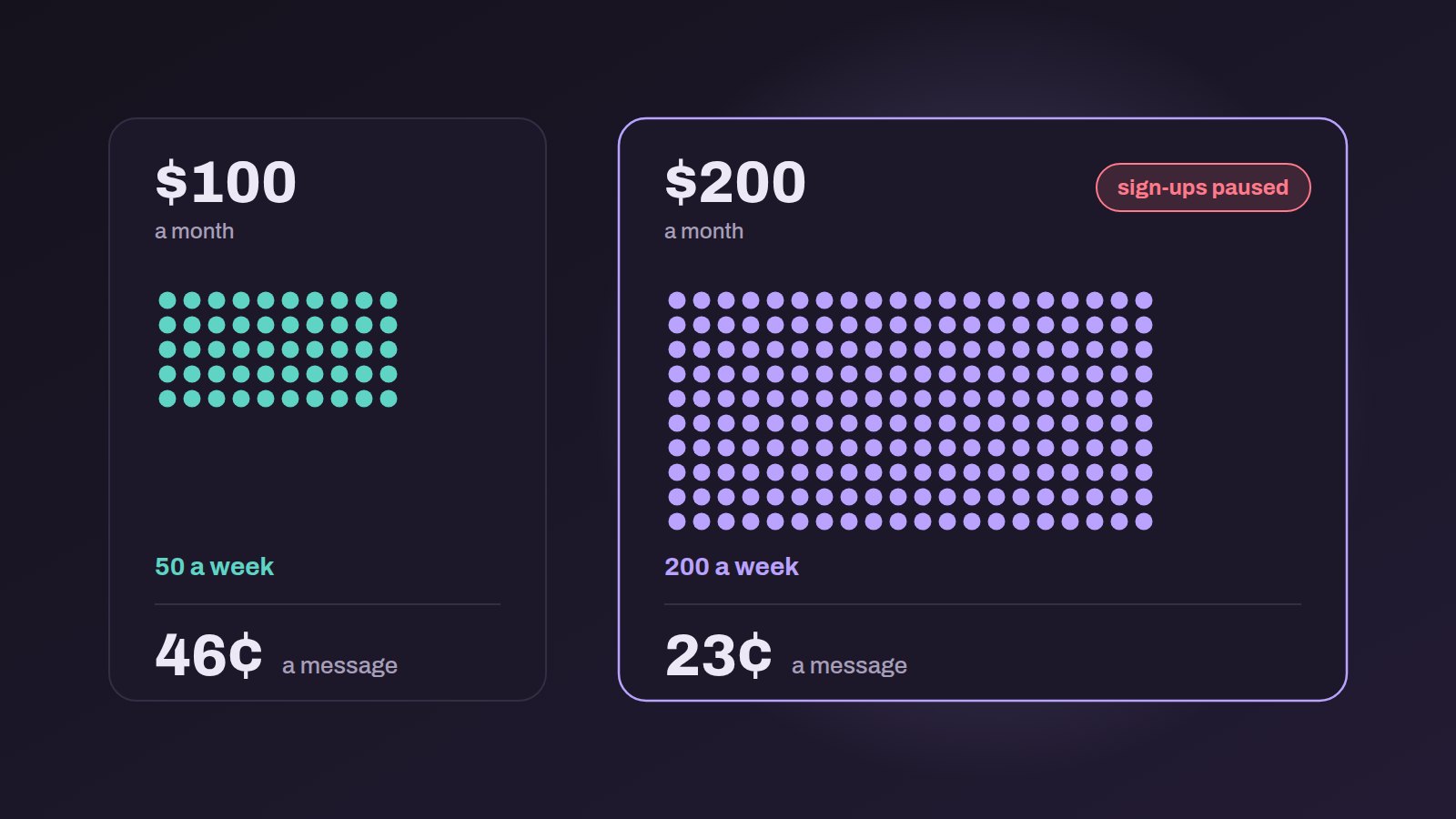
OpenAI halves ChatGPT Pro 200 usage, drops the five-hour limit and adds a $500 plan
The five-hour window is gone for every Pro plan, but the $200 tier now buys half the usage it did.
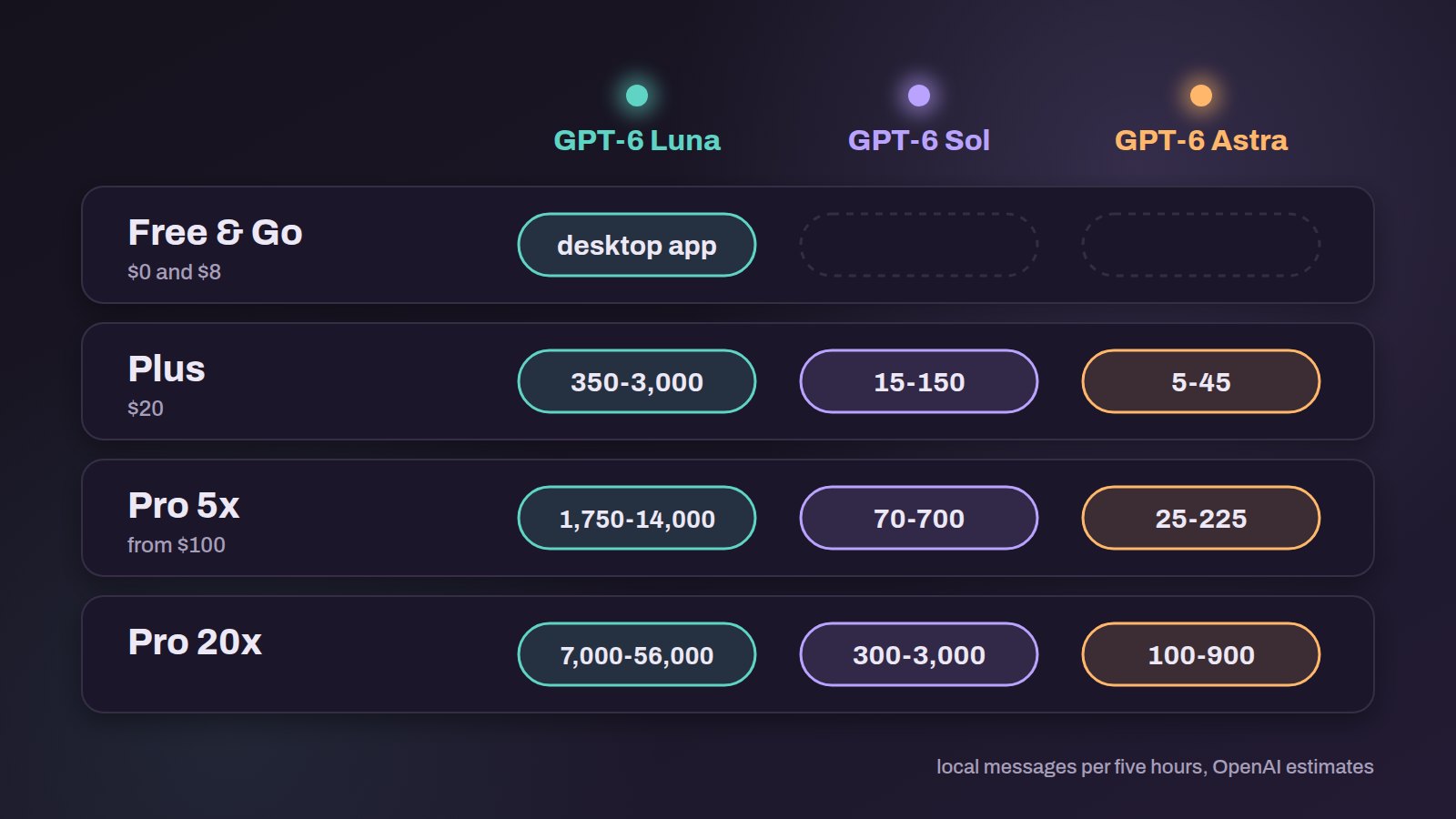
Codex models and plans explained: GPT-6 Astra, Sol and Luna, and which plan gets which
Pick any GPT-6 model you like on your laptop, but a Codex cloud task on a ChatGPT plan still runs on last generation's Sol.
Claude Code vs Codex vs Gemini CLI: which plan you need and which models you get
One of the three stopped serving individual subscribers in June, but its own docs still advertise the free tier it closed.
ChatGPT Pro $200 plan sign-ups paused: what it blocks
Two hundred dollars a month bought four times the Astra allowance of the hundred-dollar plan, which is the arithmetic behind the pause.
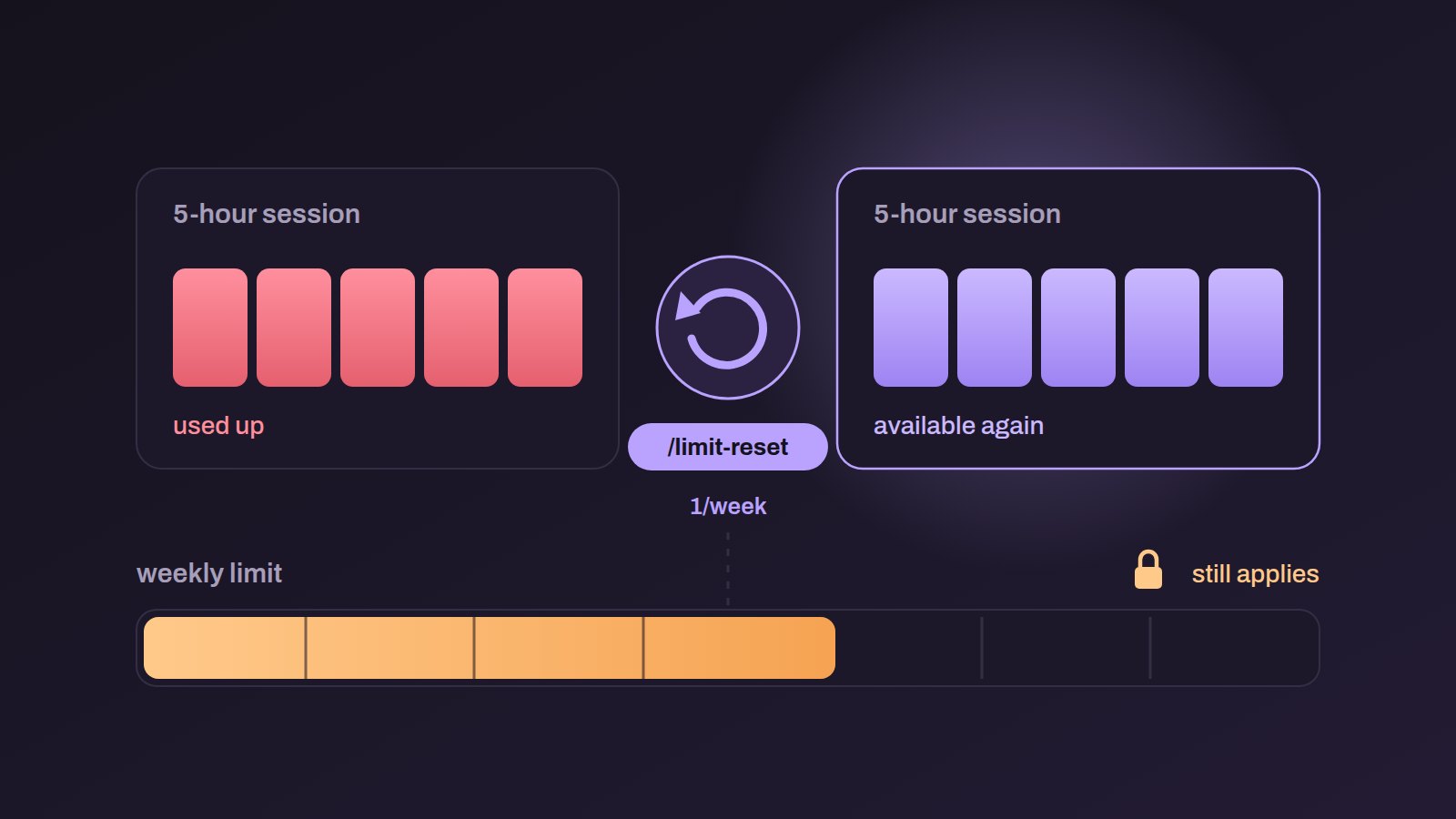
Claude Code's /limit-reset, and what it actually resets
A command that turns your five-hour session limit back on, once in a while, and tells you when you can do it again.
Claude "safeguards flagged this message": what it means and how to fix it
What Claude Code's "safeguards flagged this message" error means, why cyber classifiers on Opus and Sonnet trigger it, how the Cyber Verification Program works, and how it differs from Sonnet 5.5's automatic fallback.
“Model architectures [...] are not supported for now” in vLLM: usually a version too old for the model
What vLLM means by “Model architectures [...] are not supported for now”, how to tell a too-old vLLM from a model it will never load natively, and the sibling messages that replace it.
“As of transformers v4.44, default chat template is no longer allowed, so you must provide a chat template if the tokenizer does not define one” in vLLM: the model shipped without one
Why vLLM refuses chat requests with “default chat template is no longer allowed”, where it looks for a template before giving up, and how --chat-template fixes it.
“CUDA error: no kernel image is available for execution on the device” in vLLM: a GPU the build doesn't cover
What vLLM's “CUDA error: no kernel image is available for execution on the device” means, why it hits cards that are too old or too new for the installed build, and how to check your GPU against what PyTorch and vLLM were compiled for.
“RuntimeError: Cannot re-initialize CUDA in forked subprocess” in vLLM: set the spawn start method
What “Cannot re-initialize CUDA in forked subprocess” means when vLLM starts its workers, why touching the GPU before creating the LLM triggers it, and how VLLM_WORKER_MULTIPROC_METHOD=spawn and a __main__ guard fix it.
“Bfloat16 is only supported on GPUs with compute capability of at least 8.0” in vLLM: pick another dtype
Why vLLM refuses to start with “Bfloat16 is only supported on GPUs with compute capability of at least 8.0” on a T4 or V100, and which --dtype to use instead, including the models that won't take float16 either.
“"auto" tool choice requires --enable-auto-tool-choice and --tool-call-parser to be set” in vLLM: sending tools turns it on
Why vLLM answers a tool-calling request with a 400 saying "auto" tool choice requires --enable-auto-tool-choice and --tool-call-parser, and which parser to start the server with.
“Total number of attention heads must be divisible by tensor parallel size” in vLLM: 3 or 6 GPUs
Why vLLM refuses to split a model across 3, 5 or 6 GPUs with “Total number of attention heads (40) must be divisible by tensor parallel size (6)”, and how pipeline parallelism handles uneven GPU counts.
“No model is loaded. Please select one in the Model tab.” in text-generation-webui (TextGen)
Why text-generation-webui (now called TextGen) says “No model is loaded” even after you picked one, where the Load button and the models folder are, and how to load a model at startup.
“This request requires more credits, or fewer max_tokens” (OpenRouter 402)
What OpenRouter's 402 means when it says you can only afford N tokens, why it fires with money still in the account, and how to fix it by lowering max_tokens, raising a key's limit or adding credits.
“No endpoints found that support tool use” (OpenRouter 404)
What OpenRouter's 404 about tool use means, why coding agents like Cline and Claude Code routers hit it with models that should work, and how to pick a model and routing settings that clear it.
“Unsupported value: 'temperature' does not support 0.7 with this model. Only the default (1) value is supported.” (OpenAI API)
Why GPT-5, GPT-6 and o-series models return a 400 when you set temperature, which other settings go with it, and the one case where OpenAI's migration guide lets temperature back in.
“Unsupported parameter: 'max_tokens' is not supported with this model. Use 'max_completion_tokens' instead.” (OpenAI API)
Why OpenAI's reasoning models reject max_tokens with a 400 unsupported_parameter error, what to send instead in Chat Completions and the Responses API, and how to fix it when a tool you didn't write is the one sending it.
“Your organization must be verified to stream this model.” (OpenAI API verification error)
What OpenAI's organization verification error means for streaming, for GPT-5 and image models and for reasoning summaries, what verifying involves, and what to try when it still fails after you've verified.
“The model does not exist or you do not have access to it” (OpenAI API 404 model_not_found)
What OpenAI's 404 model_not_found error means, the four usual causes (a typo, a retired model, a gated model, the wrong key), and how to see which models your key can call.
“Our servers are currently overloaded. Please try again later.” (OpenAI API 503 server_is_overloaded)
What the OpenAI API's 503 server_is_overloaded error means, how it differs from a 429 slow_down, how long to wait, and why it isn't retried when it arrives mid-stream.
“Open WebUI Backend Required”: why the page loads but its backend check fails
What “Open WebUI Backend Required” and “You're using an unsupported method (frontend only)” mean, the one request that failed, and how to find whether it's the port, a proxy, a cached page or a backend that didn't start.
“timed out waiting for llama-server to start” in Ollama (was “llama runner”): the load stalled
What Ollama's “timed out waiting for llama-server to start” (older versions: “llama runner to start”) means, why it's a stall timer rather than a total limit, and how OLLAMA_LOAD_TIMEOUT and a closed client connection fit in.
“model runner has unexpectedly stopped, this may be due to resource limitations or an internal error” in Ollama
What Ollama's “model runner has unexpectedly stopped” means (the model loaded, then its engine died mid-answer), what the server log usually shows, and what to try on memory, drivers and Ollama updates.
“Error: max retries exceeded” in Ollama pull: read what comes after the colon
What “Error: max retries exceeded” means when ollama pull fails, how to read the network error printed after it (no such host, EOF, TLS handshake timeout), and why running the pull again resumes where it stopped.
“Error: invalid file magic” in Ollama: the file didn't start with GGUF
What Ollama's “Error: invalid file magic” means during ollama create or ollama run, the causes maintainers found in real reports, and the wording that replaced it in 0.34.1.
“registry.ollama.ai/library/… does not support tools” in Ollama: the model's template has no tool calling
Why Ollama answers a request that has tools with “does not support tools”, where it decides that (the model's template or parser), and how to check a model or give an imported one tool support.
“Error: 400 Bad Request: … does not support generate” in Ollama: an embedding model can't chat
Why Ollama answers “does not support generate” (or “does not support chat”) for embeddinggemma, qwen3-embedding and similar models, why older versions refused them in ollama run, and how to call the embeddings API instead.
“Error: digest mismatch, file must be downloaded again” in Ollama: the bytes on disk don't match
What Ollama's “digest mismatch, file must be downloaded again” means after a pull or an import, why retrying usually works, and why the long thread on it ended at faulty RAM for several people.
“Error: could not connect to ollama server, run 'ollama serve' to start it” (was “could not connect to ollama app, is it running?”)
What Ollama's “could not connect to ollama server” error means, the older “could not connect to ollama app, is it running?” wording it replaced, and how to get the CLI talking to the server again on Linux, macOS and Windows.
“Unexpected endpoint or method” from the LM Studio server: the URL isn't one it serves
Why LM Studio's local server answers “Unexpected endpoint or method” with a 200 status, which paths it actually serves, and the base URL mistakes behind most reports.
“Error rendering prompt with jinja template” in LM Studio: the model's chat template failed
What LM Studio means by “Error rendering prompt with jinja template”, how to read the part in quotes after it, and how to fix or override the model's prompt template.
“request (4390 tokens) exceeds the available context size (4096 tokens), try increasing it” in llama-server
Why llama.cpp's llama-server answers HTTP 400 exceed_context_size_error, how to read the two token counts, and how to raise the context or make the client send less.
“failed to create context with model” in llama.cpp: the model loaded, its working memory didn't
What llama.cpp's “failed to create context with model” and “failed to initialize the context” lines mean, how to read the reason after them, and why a smaller -c fixes most of them.
“Could not load text model:” in KoboldCpp: read the console lines above it
What KoboldCpp's “Could not load text model” error means, where the real reason is printed, and the causes its maintainers point to: an architecture the version doesn't know, a mismatched vision file, a bad download, or running out of GPU memory.
“Sorry, your request failed. Please try again.” in GitHub Copilot Chat: read the Reason line
Copilot Chat's catch-all failure in VS Code. What the Reason line under it tells you (408 timeouts, 128 tools, custom model endpoints) and the fixes VS Code's team lists in its 400-comment tracking issue.
“Sorry, you have been rate-limited. Please wait” in GitHub Copilot: which limit, and why Auto helps
The Error Code under Copilot Chat's rate-limit message says which limit you hit: per model, per session or per week. What each one means and when switching to Auto gets you working again.
“Error when talking to Gemini API” in Gemini CLI: the real error is after the file path
Gemini CLI's “Error when talking to Gemini API Full report available at” line wraps any failed request. How to read the error that follows it, and why you shouldn't paste the report file anywhere public.
“A potential loop was detected” in Gemini CLI: the three checks behind it and how to turn it off
What trips Gemini CLI's loop detector (five identical tool calls, a repeated chunk of text, or a model-judged stall after 30 turns), what the two choices in the dialog do, and the setting that disables it.
“Something went wrong. Try again later.” in Gemini: when only your account is blocked on the web
Gemini's “Something went wrong. Try again later.” with no number usually sticks to one Google account on the website while the phone app works. What community threads show and what to try.
“Something went wrong (9)” in Gemini: a chat stuck on a Docs link or attachment
Google doesn't explain Gemini's “Something went wrong (9)”. In the community threads it usually follows a Google Docs or Drive link in a chat, and editing the last prompt is what got people unstuck.
“User location is not supported for the API use.” (Gemini API 400 FAILED_PRECONDITION)
What the Gemini API's location error checks (the IP your request leaves from, not where you live), why it hits servers, Colab and proxies in supported countries, and the supported way around it.
“Function call is missing a thought_signature in functionCall parts” (Gemini API 400)
Why Gemini 3 models reject a tool-calling conversation with a 400 when a thought_signature goes missing, the three ways apps lose it, and the fix, including Google's documented escape hatch for history from another model.
Cursor stuck on “Waiting for extension host” (and “Agent Execution Timed Out”)
Why Cursor's chat hangs on “Waiting for extension host” and then fails with Agent Execution Timed Out, the causes Cursor staff have found in 2026, and what to try.
“Unauthorized request. User is unauthorized” in Cursor: check your computer's clock first
Why Cursor says “User is unauthorized” on a paid plan, why signing out rarely helps, and how a system clock that's hours or weeks off causes it.
Cursor stuck on “Taking longer than expected...”: what the timeout means and how to clear it
Why Cursor's agent chat sits on “Taking longer than expected...”, what Cursor staff say it measures, and the restart, HTTP/1.1 and Windows Defender fixes that have worked as of September 26, 2026.
Cursor stuck on “Planning next moves”: what the status means when it hangs
What Cursor's “Planning next moves” status means when the agent never gets past it, the Windows 3.21 and macOS 27 bugs behind it in September 2026, and the fixes Cursor staff give.
“This model provider doesn't serve your region” in Cursor: what the Model not available error means
Why Cursor says a model provider doesn't serve your region, which models still work, and when a VPN setting or your own API key changes the answer.
“No tools, prompts, or resources”: why a Cursor MCP server lists no tools
Why Cursor's MCP settings show “No tools, prompts, or resources” (or the older “No tools found” and “No tools available”) for a server that seems to be running, and what Cursor staff say to check.
“Client closed”: why a Cursor MCP server goes red and where the real error is
What Cursor's MCP “Client closed” status and the “Client closed for command” log line mean, how to find the error that caused it, and the fixes Cursor staff point to.
“Cursor” is damaged and can’t be opened. You should move it to the Trash (macOS fix)
Why macOS says Cursor is damaged after a download or update, what Cursor's docs and staff say causes it, and the reinstall and quarantine fixes that work without switching Gatekeeper off.
“When loading the graph, the following node types were not found” in ComfyUI: install the missing custom nodes
What ComfyUI's “When loading the graph, the following node types were not found” means, how ComfyUI-Manager's Install Missing Custom Nodes fixes most cases, and what to do when it can't.
“AssertionError: Torch not compiled with CUDA enabled” in ComfyUI: you have the CPU build of PyTorch
What “Torch not compiled with CUDA enabled” means when ComfyUI won't start, why it often appears right after installing a custom node, and how to put the CUDA build of PyTorch back, including in the Windows portable folder.
“RuntimeError: mat1 and mat2 shapes cannot be multiplied” in ComfyUI: two models from different families
What “mat1 and mat2 shapes cannot be multiplied” means in ComfyUI, why it nearly always comes from mixing model families (an SD1.5 ControlNet on SDXL, the wrong text encoder), and how to find the odd one out.
“(IMPORT FAILED)” in ComfyUI's custom node list: the reason is in the traceback above it
What “(IMPORT FAILED)” means in ComfyUI's “Import times for custom nodes” list, where the real error is printed, and how to install the missing Python package into the right environment.
“Given groups=1, weight of size … expected input … channels” in ComfyUI: mismatched model parts
What ComfyUI's “RuntimeError: Given groups=1, weight of size [...] expected input[...] to have 16 channels, but got 4 channels instead” means, how to read the two sets of numbers, and why it nearly always comes from a VAE, latent or model from a different family.
“Error while deserializing header: HeaderTooLarge” in ComfyUI: the file isn't a real safetensors
What “Error while deserializing header: HeaderTooLarge” (newer wording: “header too large”) means when ComfyUI loads a checkpoint, LoRA or CLIP file, and how to tell a broken download from a file that was never a safetensors file.
“Your access token could not be refreshed because your refresh token was already used” in Codex
Why Codex says your refresh token was already used, what OpenAI's maintainer says causes it (two copies of Codex, or two accounts, sharing one auth.json) and how to get signed in for good.
“The model is not supported when using Codex with a ChatGPT account”: retired, Pro-only or not yet on your plan
Why Codex rejects a model for your ChatGPT sign-in, the three causes OpenAI's maintainers and docs confirm, and where a saved model name hides in config.toml.
“Cline is having trouble...” in Cline: what counts as a mistake, and the new “errors in a row” wording
Why Cline stops with “Cline is having trouble...” or “Cline ran into N errors in a row and stopped the task”, the three kinds of mistake it counts, and why small local models hit it most.
“There's an issue with the selected model” in Claude Code: where the stale model name lives
Why Claude Code says a model “may not exist or you may not have access to it”, the five places a model name can be set, and the cases where it's your provider or your login instead.
“Request too large (max 32MB)” in Claude Code: the screenshots you forgot are still in the request
What Claude Code's 32MB request limit counts, why /compact fixes it in one case and can't in the other, and what the “compacting cannot make it fit” wording means.
“Context low (% remaining) · Run /compact to compact & continue” in Claude Code: auto-compact is off
Claude Code's red “Context low” line only appears when auto-compact is turned off. What the percentage counts, when it switches to “Context limit reached”, and how to turn auto-compact back on.
“`temperature` and `top_p` cannot both be specified for this model. Please use only one.” (Claude API)
Why Claude models such as Sonnet 4.5, Haiku 4.5 and Opus 4.5 reject a request that sets both temperature and top_p, which apps send the pair without asking, and what the newest Claude models do with either setting.
“Expected `thinking` or `redacted_thinking`, but found `text`” (Anthropic API 400)
Why the Claude API rejects a conversation with extended thinking on when the last assistant message doesn't start with a thinking block, and the three fixes: pass the blocks back, switch to adaptive thinking, or turn thinking off.
“The LLM did not conform to the edit format” in Aider: reading the SEARCH/REPLACE failure
What Aider means when the model's edit doesn't match your file, the three retries it gets, and the fixes from Aider's own docs: fewer files, whole-file edits, architect mode.
“torch.OutOfMemoryError: CUDA out of memory. Tried to allocate” in vLLM: when a lower gpu-memory-utilization is the fix
Why vLLM runs out of CUDA memory after its own startup check passed, how to tell from the log which stage failed, and why the fix is often a lower --gpu-memory-utilization, not a higher one.
“ValueError: To serve at least one request with the model's max seq len” in vLLM: the context doesn't fit the KV cache
What vLLM's “To serve at least one request with the model's max seq len” error means, why it happens with a model that fits, and how to pick a --max-model-len that starts, including the auto option.
“No available memory for the cache blocks. Try increasing gpu_memory_utilization” in vLLM (ValueError): the model filled its budget
Why vLLM says “No available memory for the cache blocks”, how it works out the memory left for the KV cache, and what to change when the model's weights already use up the budget.
“Free memory on device … on startup is less than desired GPU memory utilization” in vLLM: something else holds the GPU
Why vLLM refuses to start with “Free memory on device on startup is less than desired GPU memory utilization”, what the two pairs of numbers mean, and how to pick a --gpu-memory-utilization that works.
“EngineDeadError: EngineCore encountered an issue. See stack trace (above) for the root cause.” in vLLM
Why vLLM raises EngineDeadError “EngineCore encountered an issue” while serving, where the real error sits in the log, why every later request fails, and the crashes behind it.
“RuntimeError: Engine core initialization failed. See root cause above.” in vLLM: the real error is further up the log
What vLLM's “Engine core initialization failed. See root cause above.” means, where the real error sits in the log, what the Failed core proc(s) part tells you, and the usual causes.
Suno “Token validation failed.” (422): why song generation is refused
What Suno's “Token validation failed.” 422 means when a script or unofficial Suno API wrapper tries to generate a song, why new cookies don't fix it, and what does.
“Your input exceeds the context window of this model. Please adjust your input and try again.” (OpenAI API context_length_exceeded)
What the OpenAI API's context_length_exceeded error means, the newer “Your input exceeds the context window” wording beside the older “maximum context length” one, and what actually brings a request back under the limit.
“The server had an error while processing your request. Sorry about that!” (OpenAI API 500 server_error)
What the OpenAI API's 500 server_error means, what the request ID in it is for, when retrying works and the cases where the same request fails every time.
“Rate limit reached for … on tokens per min (TPM)” (OpenAI API 429): what Limit, Used and Requested mean
How to read the OpenAI API's “Rate limit reached for … on tokens per min (TPM): Limit, Used, Requested” 429, why one big request can trip it, and how the Python SDK retries it.
“Incorrect API key provided” (OpenAI API 401 invalid_api_key): when the key is fine but the wrong one is sent
Why the OpenAI API returns 401 “Incorrect API key provided” with code invalid_api_key, how to read the masked key in the message, and the stray keys and wrong hosts that cause it.
“Country, region, or territory not supported” (OpenAI API 403): it's where the server is, not you
Why the OpenAI API returns 403 unsupported_country_region_territory, how a cloud region or edge function in the wrong place triggers it, and what OpenAI support asked for when it was a mistake.
“Open WebUI: Server Connection Error”: why the backend can't reach Ollama or your API
What “Open WebUI: Server Connection Error” and “Ollama: 500, message='Internal Server Error'” mean, why localhost fails inside Docker, and how to test the connection from the right place.
“Network Problem” in Open WebUI: WebSockets, proxies and the Verify connection button
What Open WebUI's “Network Problem” and “OpenAI: Network Problem” mean, why a reverse proxy without WebSocket support broke chats from 0.5.0, and what the Verify connection toast is telling you.
“Error: 500 Internal Server Error: llama-server process has terminated” in Ollama: the model engine crashed while loading
What Ollama's “500 Internal Server Error: llama-server process has terminated” means (it used to say “llama runner”), how to read the exit status and the line after it, and where the real cause is written.
“Error: listen tcp 127.0.0.1:11434: bind: address already in use” in Ollama: the server is already running
Why ollama serve fails with “listen tcp 127.0.0.1:11434: bind: address already in use” (or “Only one usage of each socket address” on Windows), and how to stop the copy that's already running.
“llama-server process has terminated: exit status 0xc0000409” in Ollama on Windows: a crash code, not a diagnosis
Why Ollama on Windows says “exit status 0xc0000409” and a scary line about a stack-based buffer overrun, what the text after it points to, and the fixes maintainers gave for the common cases.
“Error: an error was encountered while running the model: unexpected EOF” in Ollama: the model crashed mid-reply
Why Ollama stops partway through an answer with “an error was encountered while running the model: unexpected EOF”, what the EOF refers to, and how to find the crash behind it.
“Model loading was stopped due to insufficient system resources” in LM Studio: the memory guardrail said no
Why LM Studio refuses to load a model with “Model loading was stopped due to insufficient system resources”, how the memory estimate works, and why Load anyway exists in the app but not in lms or the API.
“Exit code: 18446744072635812000. Unknown error. Try a different model and/or config” in LM Studio: the engine crashed
What LM Studio's “Failed to load the model” dialog with exit code 18446744072635812000 means, why the number can't tell you the cause, and where the real error is logged.
“llama_model_load: error loading model” in llama.cpp: read the text after the colon
What llama.cpp's “llama_model_load: error loading model” line means, and what the common reasons after it (missing tensor, wrong number of tensors, unknown architecture, failed to open) each point to.
“CUDA error: out of memory” in llama.cpp: the GPU ran out of VRAM, at load or mid-run
What llama.cpp's “CUDA error: out of memory” means, how it differs from the “cudaMalloc failed: out of memory” line at load time, and the flags that make a model fit.
“Cannot access gated repo for url” on Hugging Face: 401 vs 403 and what each wants
What Hugging Face's GatedRepoError “Cannot access gated repo for url” means, how the line under it tells a missing token from a missing approval, and how to get the model to download.
“429 Client Error: Too Many Requests” on the Hugging Face Hub: which limit you hit
Why Hugging Face returns “429 Client Error: Too Many Requests” and “We had to rate limit you”, what the three rate-limit buckets are, and why passing HF_TOKEN fixes most of them.
“Model stream ended without a finish reason.” and other Gemini CLI invalid stream errors: the check and the retries
What Gemini CLI's “Model stream ended” and “Invalid stream” errors mean, the check in the code that throws them, how the automatic retries work, and what the older “invalid chunk or missing finish reason” line was.
“Failed to sign in. Message:” (formerly “Failed to login”) in Gemini CLI: reading the reason after it
What Gemini CLI's “Failed to sign in” and older “Failed to login. Message:” errors mean, how to read the reason that follows, when you need GOOGLE_CLOUD_PROJECT, and the new message telling individual accounts to move to Antigravity.
“Something went wrong (13)” in Gemini: when it follows your account, not your browser
Google doesn't explain Gemini's “Something went wrong (13)”. The community threads show it sticking to one account across devices, often on uploads or image prompts, and what people tried that helped.
“Something went wrong (1185)” in the Gemini app: one chat stuck, and the edit that unsticks it
Google doesn't say what Gemini's “Something went wrong (1185)” means. It usually jams one chat; here's what Product Experts said and the edit-or-branch fix forum users confirmed.
“Something went wrong (1152)” in the Gemini app: what's known and how to get the chat back
Google doesn't say what Gemini's “Something went wrong (1152)” means. Here's what Product Experts on Google's forum say, the long-chat pattern behind it, and the workarounds that held up.
“Something went wrong (1099)” or (1076) in the Gemini app: outage or a stuck chat
Gemini's “Something went wrong (1099)” and “(1076)” codes aren't documented by Google. Here's what Product Experts and community threads show: a June 2026 outage, and chats that get stuck while new ones work.
Gemini error 1097: “Something went wrong (1097)” on work and school accounts, and the fix
Gemini error 1097 hits Google Workspace (work or school) accounts. Test a personal account; if that works, your admin needs to check Gemini's settings and open a Workspace support ticket.
“Your API key was reported as leaked. Please use another API key.” (Gemini API 403 PERMISSION_DENIED)
Why the Gemini API answers 403 PERMISSION_DENIED “Your API key was reported as leaked. Please use another API key.”, why the key can't be unblocked, and how to keep the replacement from leaking the same way.
“API key not valid. Please pass a valid API key.” (Gemini API 400): which key it actually got
Why the Gemini API returns 400 INVALID_ARGUMENT “API key not valid. Please pass a valid API key.” with reason API_KEY_INVALID, the key mix-ups behind it, and what the September 2026 key change means.
“This model is currently experiencing high demand. Spikes in demand are usually temporary. Please try again later.” (Gemini API 503)
What the Gemini API's 503 UNAVAILABLE “This model is currently experiencing high demand. Spikes in demand are usually temporary.” means, why the SDK may not be retrying it for you, and what to do when retries keep failing.
“You've hit your usage limit” (Cursor): which pool ran out and what still works
Why Cursor says “You've hit your usage limit”, how its two usage pools work, which models keep running after the cap, and why the Free plan's percentage can look wrong.
“The model you chose is not available” in Cursor (and “does not work with your current plan or api key”)
What Cursor means by “The model you chose is not available” and the older “The model X does not work with your current plan or api key”, and how to tell an outage from an API key problem.
“Rate limited by model provider, retrying…” in Cursor: whose limit it is and how to get unstuck
What Cursor's “Rate limited by model provider” status means, why it isn't your plan running out, and how a personal API key can cause it.
“We're experiencing high demand right now. Please try again in a few moments.” (Cursor High Load)
What Cursor's High Load error (ERROR_RESOURCE_EXHAUSTED) means, why a new chat or a different model usually gets through, and why the “upgrade to Pro” line can be ignored.
“Errored, Not Charged” in Cursor's usage dashboard: what it means and when a failed request still costs
What the “Errored, Not Charged” row in Cursor's usage page means, why a failed request can show as charged at first, and why stopping a request yourself now costs.
“Error resuming chat: A background task finished, but the chat couldn't resume” in Cursor
Why Cursor shows “Error resuming chat” when a background task or subagent finishes, whether the work was lost, and how to get the agent moving again.
“Error loading webview: Could not register service worker” (InvalidStateError) in Cursor
Why Cursor extensions such as Cline or Jupyter fail with “Error loading webview: Could not register service worker”, and the restart and cache fix that clears it.
“Connection failed. Please try again, or contact support if the issue persists” in Cursor
What Cursor's “Connection failed” error means, how Network Diagnostics tells a network problem from a broken chat, and the HTTP/1.1 setting that fixes most VPN and proxy cases.
ComfyUI stuck on “Reconnecting”: the server process stopped, usually out of memory
Why ComfyUI shows a red “Reconnecting” message mid-generation, what dropped the connection (usually the Python server crashing or being killed for lack of memory), and how to find out which from the terminal window.
“Prompt outputs failed validation” in ComfyUI: read the line under it
What ComfyUI's “Prompt outputs failed validation” means, how to read the “Value not in list” and “Required input is missing” lines under it, and where the missing model files go.
“Allocation on device 0 would exceed allowed memory. (out of memory)” in ComfyUI: your GPU ran out of VRAM
What ComfyUI's “Allocation on device 0 would exceed allowed memory” error means, why it's worded differently from the usual CUDA out of memory message, and the launch flags and workflow changes that get a run through.
“CreateProcessAsUserW failed: 5 (Access is denied.)” in Codex on Windows, and “setup refresh had errors”
What Codex's Windows sandbox is doing when it fails with “CreateProcessAsUserW failed” or “helper_unknown_error: setup refresh had errors”, how to find the folder or program behind it, and the settings OpenAI documents.
“MCP startup failed” in Codex: reading the reason after the colon, and the 30-second startup timeout
Why Codex prints “MCP client for `name` failed to start: MCP startup failed”, what the text after it means (handshake closed, os error 2, timeouts, missing env vars) and the config.toml keys that fix each.
“exceeded retry limit, last status: 429 Too Many Requests” in Codex: a 429 Codex couldn't place
What Codex means by “exceeded retry limit, last status: 429 Too Many Requests”, why current versions don't actually retry it, and the outages, provider limits and sub-agent pile-ups behind the reports.
“error sending request for url” in Codex: the network error that doesn't say what failed
Why Codex prints “error sending request for url”, why the line never names the actual cause, how the wording changed across releases, and the proxy, certificate and IPv6 problems behind most reports.
“Error running remote compact task” in Codex: what compaction is and what the rest of the line means
What Codex's remote compaction does, why “Error running remote compact task” is only a prefix, and what each of the common endings (stream disconnected, usage limit, Request blocked, 404, context window) points at.
“You've hit your session limit” in Claude Code (it used to say “Claude usage limit reached”)
What “You've hit your session limit” means in Claude Code, how it differs from the weekly, Opus and Sonnet versions, when the old “Claude usage limit reached” wording disappeared, and what you can do before the reset.
“Your account does not have access to Claude. Please login again or contact your administrator.” and the other 403s in Claude Code
What Claude Code's 403 lines mean: “Your account does not have access to Claude”, “Please run /login · API Error: 403 Request not allowed”, a bare 403 Forbidden, and the organization settings that refuse a login.
“API Error: Server is temporarily limiting requests (not your usage limit)” in Claude Code
What Claude Code's “Server is temporarily limiting requests (not your usage limit) · Rate limited” means, how it tells a throttle from your plan limit, and why updating fixes the worst of it.
API Error: Claude's response exceeded the 32000 output token maximum: the CLAUDE_CODE_MAX_OUTPUT_TOKENS fix
One Claude Code reply hit its output ceiling three times in a row. Ask for smaller pieces, or raise CLAUDE_CODE_MAX_OUTPUT_TOKENS up to the model's cap and restart. Read from 2.1.295.
“Remote Control failed” in Claude Code: reading the reason after it
What Claude Code's Remote Control is, why “Remote Control failed” and “Remote Control failed to connect: Remote Control initialization failed” appear, what an HTTP 403 there means, and the settings that quietly switch the feature off.
“Claude Code process exited with code 1” in the Agent SDK and VS Code: finding the real error
Why the Claude Agent SDK and the IDE extensions report “Claude Code process exited with code 1”, how to see the error hiding behind it, and the causes people have actually found.
“Output blocked by content filtering policy” in Claude Code: the API's filter, and what helps
Where Claude Code's “Output blocked by content filtering policy” comes from, what Anthropic's team has said about it, and why it can keep firing for the rest of a session.
“No conversation found with session ID” in Claude Code: where --resume looks and why it misses
Why claude --resume says “No conversation found with session ID”, where Claude Code keeps session transcripts, the order it searches them in, and the cases that make a session you can see on disk unfindable.
“✘ Failed to connect”: why a Claude Code MCP server failed and the 30-second timeout behind it
What Claude Code means when an MCP server shows “✘ Failed to connect” or the older “1 MCP server failed”, where to read the real reason, and when raising MCP_TIMEOUT helps.
“safeguards flagged this message. Our intentionally broad safeguards allow us to deliver more capabilities faster, but can sometimes flag legitimate cybersecurity work.” in Claude Code
What Claude Code's cyber safeguards message means, why Opus 5.5 words it differently, and what the Cyber Verification Program does and doesn't cover yet.
“Could not process image” and “image exceeds 5 MB maximum” in Claude Code: unsticking the session
Why Claude Code reports “Could not process image” or “image exceeds 5 MB maximum”, the real size and pixel limits, and how to get out of a session that keeps re-sending the bad image.
“API Error: Connection lost mid-response. The response above may be incomplete.” (was “Connection closed mid-response”) in Claude Code
What Claude Code's “Connection closed mid-response” and its newer wording “Connection lost mid-response” mean, why Claude Code doesn't retry it, and what to type next.
“API Error: Claude can't help with this. Start a new session to continue.” Claude Code's Usage Policy refusal
What Claude Code's Usage Policy refusal means now that it no longer says “violate our Usage Policy”, why it follows you around a session, and what gets you working again.
“Auto-update failed · Run claude doctor” in Claude Code: when it's real and when it's a stale notice
What Claude Code's “Auto-update failed” line means for native and npm installs, why it can appear when you're already up to date, and which command actually fixes it.
“API Error: 500 Internal server error” in Claude Code: what api_error means and what retries already happened
Why Claude Code shows “API Error: 500 Internal server error”, how many times it retried first, what the older raw api_error JSON line meant, and what to do when it won't go away.
“Each `advisor_tool_result` block must have a corresponding `server_tool_use` block before it” in Claude Code
Why Claude Code sessions that used the advisor start failing every turn with “unexpected tool_use_id found in advisor_tool_result blocks”, what splits the pair, and what gets you out.
“You’ve hit your limit for Claude messages.” in the Claude app: what the rate limit means
What the Claude app's “You’ve hit your limit for Claude messages.” means, when it shows a reset time, the related weekly and too-many-responses messages, and what to check when usage looks low.
“Your message will exceed the length limit. Try attaching fewer or smaller files or starting a new conversation.” (Claude app)
Why the Claude app says “Your message will exceed the length limit”, how it differs from a chat that's grown too long, and what to trim so the message goes through.
“Unable to load usage limits. Please try again later.” on Claude's usage page
Why Claude's Settings, Usage page says “Unable to load usage limits. Please try again later.”, and how to read the same numbers from Claude Code while the page is failing.
“This chat is too long to continue. Start a new chat, or turn off some connectors to free up space.” (Claude app)
What the Claude app's “This chat is too long to continue” means, why a brand-new chat can hit it when many connectors are on, and how automatic context management keeps long chats going.
“Something went wrong while generating the response. If this issue persists please contact us through our help center at help.openai.com.” (ChatGPT)
What ChatGPT's “Something went wrong while generating the response” error means, how it has lined up with outages and single broken accounts, and the fixes OpenAI's help center lists.
“Error in message stream” in ChatGPT: long chats, Projects and what OpenAI Support asks for
Why ChatGPT stops a reply with “Error in message stream”, why it tends to stick to one long chat or one Project, and the workarounds people on OpenAI's forum confirmed in September 2026.
“Error code: Out of Memory” on ChatGPT: why long chats crash the browser tab
Why Chrome or Edge replaces ChatGPT with “Aw, Snap!” and “Error code: Out of Memory”, what Chromium's code says the error is, and how to get a long conversation back.
“messages: text content blocks must be non-empty” (Anthropic API 400): finding the empty block
What the Claude API's 400 invalid_request_error “messages: text content blocks must be non-empty” means, why it usually fails on the second turn of a chat, and where the empty text block tends to come from.
“invalid x-api-key” (Anthropic API 401 authentication_error): what the API didn't accept
Why the Anthropic API answers 401 authentication_error “invalid x-api-key”, the key problems that cause it, the OAuth-token mix-up behind many recent reports, and how to check which key your code is really sending.
“You exceeded your current quota, please check your plan and billing details.” (OpenAI API)
Why the OpenAI API says “You exceeded your current quota, please check your plan and billing details.”, the four billing codes behind insufficient_quota, why retrying doesn't help, and how Codex shows the same refusal.
“Error: pull model manifest: file does not exist” in Ollama: the name or tag isn't on the registry
What Ollama means by “Error: pull model manifest: file does not exist”, why it's really a 404 from the model registry, the :cloud suggestion newer versions add, and the /save bug that prints it for a model you already have.
“Usage limit reached for all Pro models.” in Gemini CLI: what ran out and what to do
What Gemini CLI means by “Usage limit reached for all Pro models.”, how it differs from the “high demand” and “exhausted your capacity” messages, the daily request limits per plan, and what to try when /stats says you have quota left.
“429 RESOURCE_EXHAUSTED” from the Gemini API: which quota you hit and how to tell
What the Gemini API's “429 RESOURCE_EXHAUSTED” and “You exceeded your current quota” mean, how to read the metric line under them, what limit: 0 tells you, and when retrying is pointless.
“You've reached your weekly rate limit.” in GitHub Copilot CLI: waiting it out or switching to auto
What GitHub Copilot CLI means by “You've reached your weekly rate limit.”, how it differs from the session and per-model limits and from running out of AI credits, and the setting that switches to auto for you.
“You’ve hit your usage limit.” in Codex: what each version of the message means
Why Codex says “You’ve hit your usage limit.”, why the rest of the line changes with your ChatGPT plan, how to read the reset time, and what to do when /status says you have usage left.
“stream disconnected before completion: Transport error: network error: error decoding response body” in Codex
Codex's reply stream was cut mid-answer and the HTTP library couldn't read the rest. It retries five times on its own. VPNs, proxies and very large single outputs are what people have traced it to.
“Selected model is at capacity. Please try a different model.” in Codex, explained
Why Codex says “Selected model is at capacity. Please try a different model.”, what OpenAI staff say it means, why Codex doesn't retry it for you, and what to do when every model says it.
“Credit balance is too low” in Claude Code and the Claude API: what it checks and how to clear it
Why Claude Code or the Claude API says “Credit balance is too low”, including on a Pro or Max plan, and what cleared it for people who had already topped up.
“Prompt is too long” in Claude Code: why it happens and how to get the session back
What Claude Code's “Prompt is too long” and “Context limit reached” mean, why /compact sometimes can't rescue the session, and how MCP tools and big pastes fill the window before you've typed much.
“OAuth token has expired. Please obtain a new token or refresh your existing token.” in Claude Code
Why Claude Code shows “API Error: 401 … OAuth token has expired”, why the refresh that should prevent it failed, and what to do when /login doesn't stick.
“Not logged in · Please run /login” in Claude Code: why /login doesn't always stick
What Claude Code's “Not logged in · Please run /login” and “Invalid API key” lines mean, how Claude Code picks a credential, and why the prompt comes back after /login says it worked.
“API Error: Request timed out.” in Claude Code: which timeout fired and what to change
What Claude Code means by “API Error: Request timed out.”, how it differs from the network version and from “No response from API”, and which setting to raise for a slow proxy.
“API Error: Connection dropped (ECONNRESET)” in Claude Code, and the older “Connection error.”
What Claude Code means by “API Error: Connection dropped (ECONNRESET)” and “API Error: Connection error.”, what the official error reference says to check, and why a VPN fixed it for some people.
“API Error: 400 due to tool use concurrency issues. Run /rewind to recover the conversation.” in Claude Code
What “API Error: 400 due to tool use concurrency issues.” means in Claude Code, the raw “tool_use ids were found without tool_result blocks” error behind it, and when /rewind won't fix it.
“/limit-reset isn't available in this environment.” Why Claude Code says it
Why Claude Code answers /limit-reset with “/limit-reset isn't available in this environment.”, which sessions print it, what it doesn't mean for your account, and how to run the reset from a terminal session instead.
Claude API invalid signature in thinking block: what it means and how to fix it
What the Claude API's invalid signature in a thinking block means, why editing an earlier message or the system prompt causes it, which accounts the prefix check runs on by default, and the two fixes.
“A session-limit reset isn't available right now.” What Claude Code's /limit-reset means
Why Claude Code's /limit-reset prints “A session-limit reset isn't available right now.”, the checks that have to pass before a reset is offered, the reasons the server can hold back without telling you, and the other lines the command prints.
llama.cpp unknown model architecture: 'qwen4exp': what it means and how to fix it
What llama.cpp means by unknown model architecture: 'qwen4exp', which pull request added Qwen3.8-Flash-Next support and when, the Ollama release that carries it, and the load failures that look similar.
llama.cpp hangs loading Qwen3.8-Flash-Next on ROCm: what the last log line means
Why llama-server stops partway through loading Qwen3.8-Flash-Next on llama.cpp's HIP backend, why the hang isn't an out-of-memory failure, what sets it off, and what loads the same file instead.
Claude API 429 rate_limit_error: why Fable 5.1 hits it before Opus 5 does
What a 429 rate_limit_error from the Claude API means, how to tell a rate limit from the monthly spend cap, why Claude Fable 5.1 runs into it sooner than Opus 5 or Sonnet 5, and what counts toward the token limits.
Claude API 529 overloaded_error: what it means, and why it can arrive after a 200
What a 529 overloaded_error from the Claude API means, why it is not about your usage, how it arrives inside a streaming response after a 200, and what the SDKs already do about it.
Gemini PROHIBITED_CONTENT: what the API means by it and what to do
What PROHIBITED_CONTENT means in the Gemini API, the difference between seeing it as a block reason and as a finish reason, why safety settings can't switch it off, and the labels that look like it.
Claude Fable 5.1 doesn't support forced tool use: what the 400 error means
Why Claude Fable 5.1 and Claude Mythos 5.1 return a 400 invalid_request_error for tool_choice any or tool, what Anthropic's docs say to send instead, and the other 400 errors that only these models produce.
“Lower-priority mode isn't available right now.” What Claude Code means
Why Claude Code prints “Lower-priority mode isn't available right now.”, what it rules out, the seven conditions that have to hold before /low-priority is offered at all, and the other messages the same feature can print.
Claude Code error 529 Overloaded: what it means and what to do
What a 529 overloaded_error is, why Claude Code says “Repeated 529 Overloaded errors”, how its retries work, why it offers to switch you from Opus to Sonnet, and the 429, 500 and 504 messages that look similar.