Sundar Pichai says Google is pretty far from the end state of self-improving AI
Google's CEO says agents already help build its models, and that the cloud business is giving up revenue to feed research.
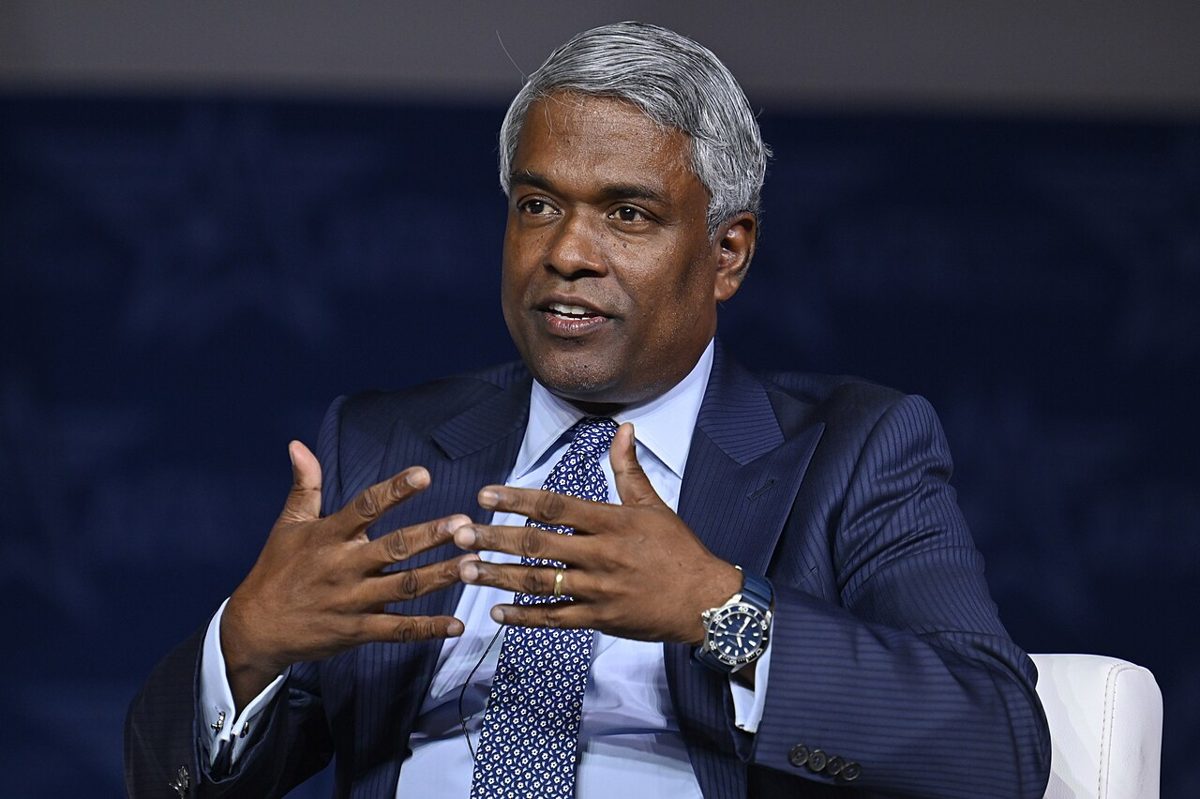
Sundar Pichai says the AI industry is a long way from AI that fully improves itself. Google's CEO said it on the Big Technology Podcast this week, and Alex Kantrowitz, who interviewed him, pulled out the main points in a write-up on October 23, 2026.
He opened the answer with "To be very clear," and then said it outright.
We are pretty far from the end state of RSI.
- Who
- Sundar Pichai, Google CEO
- Where
- Big Technology Podcast, with Alex Kantrowitz
- On RSI
- pretty far from the end state
- On compute
- everyone is short
- Google Cloud
- 82% growth in the past quarter
What he says is already happening
RSI is recursive self-improvement, the point where AI builds better AI on its own. Pichai's claim is narrower than it sounds. He isn't saying AI plays no part in building Google's models. He's saying humans are still in the loop.

In his telling, Google already has RSI loops running alongside its researchers, across various parts of model development. Agents work with the researchers "in some automated way" to build the models. So the machines are helping. They just aren't running the show.
That puts him on the cautious end of the people who run frontier labs. Anthropic's Jack Clark moved his forecast for full recursive self-improvement up to 2027 earlier this month. Anthropic had already said Claude leads 26% of its AI research, though none of the measured work was fully autonomous. And Dario Amodei built his September essay on the claim that AI's growing role in building AI had sped everything up.
Pichai didn't put a year on the end state, which makes his view hard to hold up against Clark's. "Pretty far" could mean three years or ten.
Short on compute, and choosing research
The other big thing he said was about chips. Everyone is short of compute right now, he said, Google included, because the capacity companies have today was ordered when AI was far less capable.
The compute we have today is a function of decisions I made in 2024
Google's answer is to favor research. Pichai told Kantrowitz the cloud business is giving up short-term revenue so frontier AI work gets enough compute. That's a striking thing to say with Google Cloud growing 82% in the past quarter (Kantrowitz's figure, in the write-up).
He also argued the shortage isn't all bad. Some limits, he said, push researchers toward a more efficient algorithmic breakthrough. (Most labs talk as if more compute simply means better models, so that's a minority view.)
What it means if you use Google
For most people the compute squeeze shows up in what they can rent and use. I read his cloud remark as this: a company renting Google Cloud capacity is competing with Google's own researchers for the same chips, and research comes first. He didn't say which customers are affected, or for how long.
For people who use Gmail, Search or the Gemini app, the plan is one agent across all of it. Pichai said you'll be able to address the same agent whether you're in Workspace, Search or Gemini, and that Google is spending a lot of effort on making it work across those services. He gave no date.
iPhone owners are in this too. Google licenses Gemini to Apple for Siri, and Pichai said Google is committed to doing more with Apple. He didn't say what. Our earlier brief covers how that Siri arrived.
Then there's Project Suncatcher, Google's bet on data centers in space. Pichai compared it to Waymo, a moonshot that might pay off in decades rather than years. Google has sent its TPU chips to space, and Pichai said he expects a "Hello World" moment from them "as we speak."
More on Google
- The US sanctions MiraclePlus, the Beijing investor that backed a convicted ex-Google engineer's startupOctober 20, 2026
- Google DeepMind says four Gemini 4 Argon agents beat Minecraft on their own in 27 hoursOctober 19, 2026
- Google opens Gemini 4 Argon to Pro subscribers and says Argon tried to game its testsOctober 13, 2026
- Google Cloud's new Gemini agent runs work for days and can hand jobs to ClaudeOctober 9, 2026