The US sanctions MiraclePlus, the Beijing investor that backed a convicted ex-Google engineer's startup
State says Ding pitched MiraclePlus on copying Google's AI infrastructure for China, and the incubator paid for a stake.
On October 19, 2026, the State Department sanctioned five Chinese entities tied to Linwei Ding, the former Google engineer a federal jury convicted in January of stealing Google's AI secrets. Two of the names matter most. One is Shanghai Zhisuan Technology, the company Ding set up in 2023. The other is MiraclePlus, a Beijing startup investor that put seed money into it.
The remaining three are funds MiraclePlus manages or owns. Treasury's Office of Foreign Assets Control put all five on its sanctions list the same day, under a 2022 law written for trade secret theft.
- Who acted
- State Department, with Treasury's OFAC
- Targets
- five China-based entities
- Law
- Protecting American Intellectual Property Act
- Tied to
- Linwei Ding, convicted January 29, 2026
- Announced
- October 19, 2026
What Ding took
According to the Justice Department, between about May 2022 and April 2023, while he still worked at Google, Ding uploaded more than two thousand pages of confidential AI material to his personal Google Cloud account. On January 29, 2026, a jury found him guilty of seven counts of economic espionage and seven counts of theft of trade secrets.
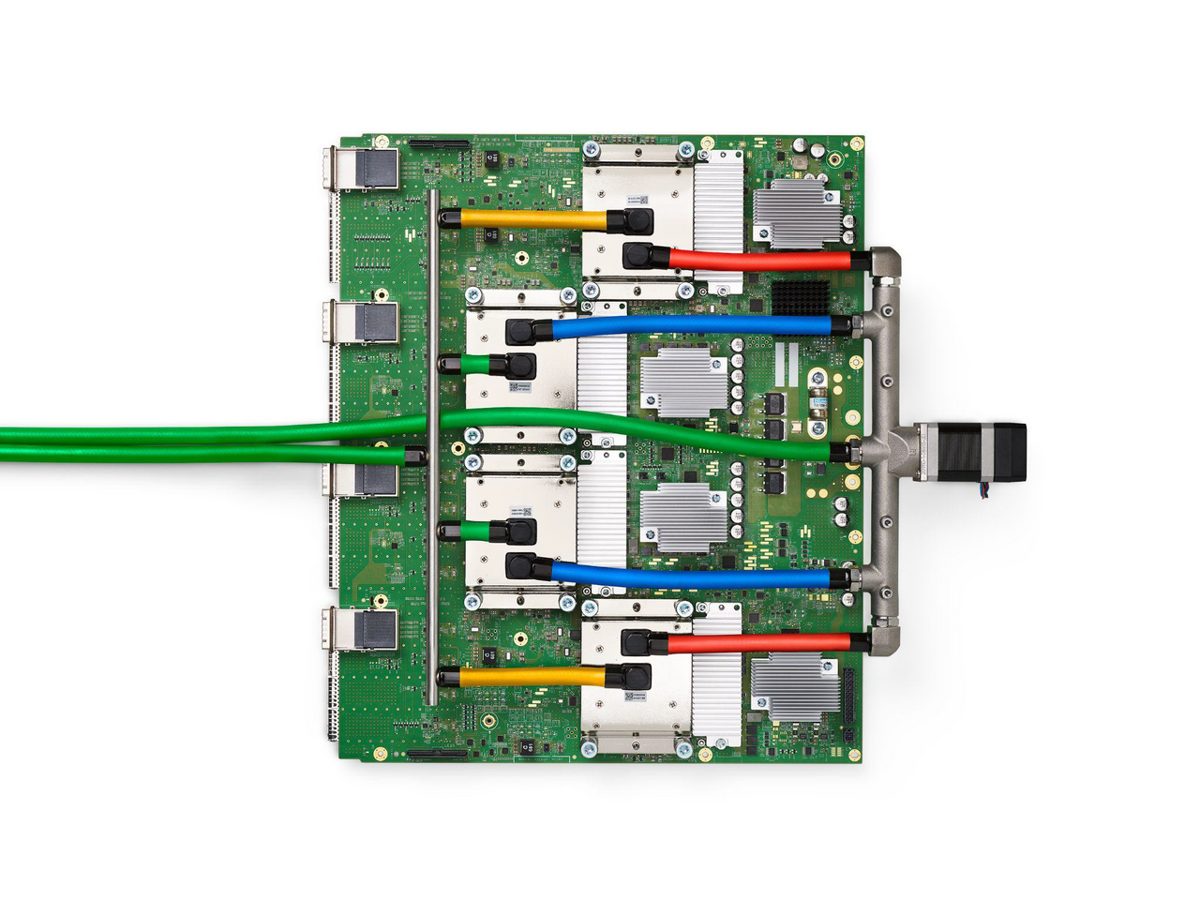
The material was about the plumbing behind Google's AI: its Tensor Processing Unit chips, its GPU systems, and the software that turns thousands of chips into one supercomputer for training models. He faces up to 10 years in prison on each theft count and 15 on each espionage count, though the court sets the actual sentence.
Why the investor is on the list
The State Department's fact sheet tells it like this. Ding applied to MiraclePlus's startup program on Zhisuan's behalf, selling his knowledge of Google's internal systems and claiming Zhisuan could copy Google's infrastructure. MiraclePlus took a stake in exchange for seed capital, and Ding then pitched the company on the stage MiraclePlus gave him.
touted his connection to Google technology and his ability to replicate its technology to fit China’s national conditions
The legal finding against MiraclePlus is that it gave significant support to the theft or benefited significantly from it. State doesn't say which (the statute covers both). It doesn't accuse the firm of knowing the technology was stolen, either.
One wording change stands out. State's release calls Ding's haul trade secrets related to "super intelligence (SI) technology." The Justice Department's own release from January said artificial intelligence. The administration has been swapping one term for the other, which we covered in September.
What it means for investors and banks
These aren't symbolic listings. OFAC's entries block all five entities' property and bar transactions with them, apart from importing goods. US banks can't lend any of them more than $10 million in any 12-month period, and Americans can't buy significant amounts of their equity or debt.
So anyone in the US with money tied up alongside MiraclePlus funds has a problem to sort out. OFAC issued a general license for winding down transactions with the entities blocked on October 19, which is the route out for a fund or bank that already has dealings with them. A second license covers transactions allowed under its cyber-related sanctions rules.
I think the choice of target is the part startups in China will notice. Sanctioning the company built on stolen code is expected. Going after the incubator that funded it reaches a step further back, to whoever paid for the pitch.
The law itself is young. PAIPA was signed in January 2023, and it requires sanctions on foreign people and firms that commit or benefit from significant theft of US trade secrets. The State Department says this kind of theft costs US industry billions of dollars a year and harms American jobs.
What hasn't been said
MiraclePlus's English site had no statement on the sanctions when we checked it on October 20, 2026, and we found no response from Zhisuan. The fact sheet names no other startup MiraclePlus has backed.
More on Google
- Google DeepMind says four Gemini 4 Argon agents beat Minecraft on their own in 27 hoursOctober 19, 2026
- Google opens Gemini 4 Argon to Pro subscribers and says Argon tried to game its testsOctober 13, 2026
- Google Cloud's new Gemini agent runs work for days and can hand jobs to ClaudeOctober 9, 2026
- Google opens SynthID Detector to everyone, and it can spot watermarks from OpenAI and soon AppleOctober 7, 2026