We priced 48 AI models on the same job. The bill ran from 19 cents to $89.
One month of steady use, list prices only, the same words in and the same words out.
Every lab publishes a price page, and every price page is about that lab. Put all of them on one table and the first thing you notice is that the same job costs 19 cents a month on one model and $89 on another.
Here's the job we priced, and what came out.
The job
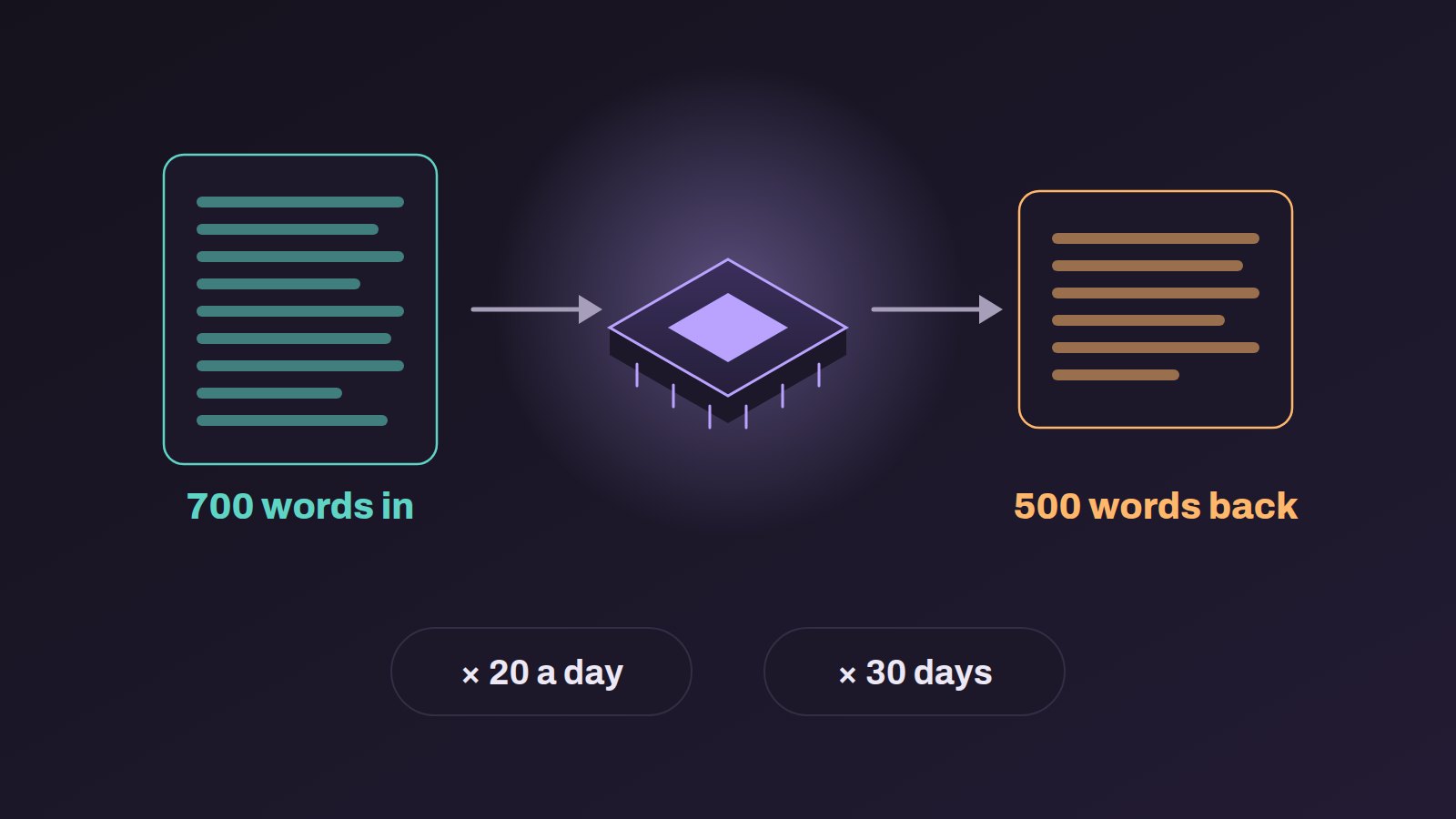
One request is 700 words in and 500 words back. Call it a long email and a decent reply. Run it twenty times a day, thirty days. Every model on the list got exactly that job.
Words aren't tokens, so we convert at the usual English rate, about four characters to the token. Every price is the lab's own list price, taken from its own docs.
The spread is 462x
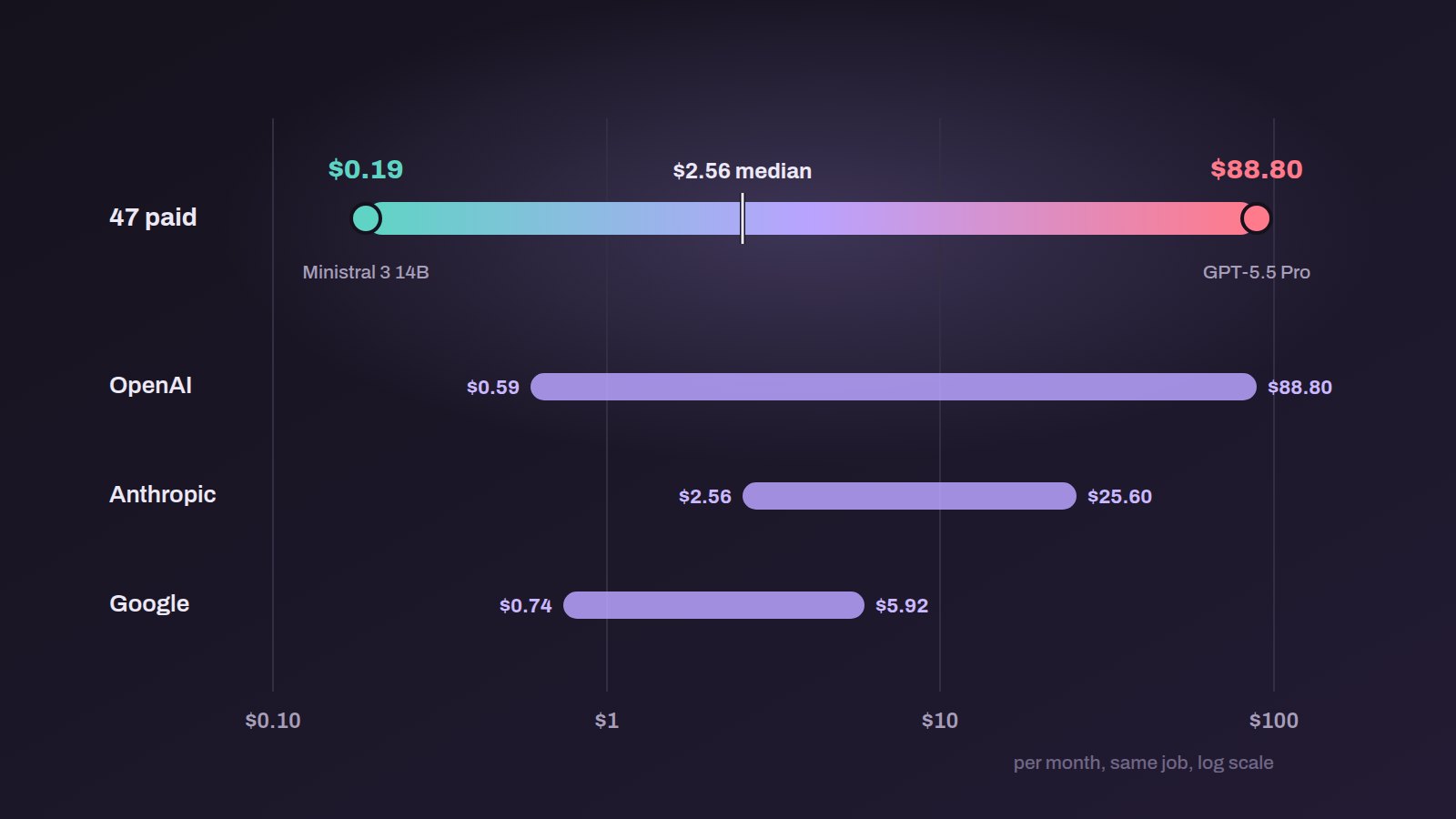
Cheapest thing you can pay for: Mistral's Ministral 3 14B, at 19 cents a month. Most expensive: OpenAI's GPT-5.5 Pro, at $88.80. Same words, same count, same thirty days.
The middle of the table sits at $2.56. It means the typical model on this list costs about as much as a coffee to run for a month at a real, steady, daily workload. The scary numbers are all at one end.
Output is the expensive half, everywhere
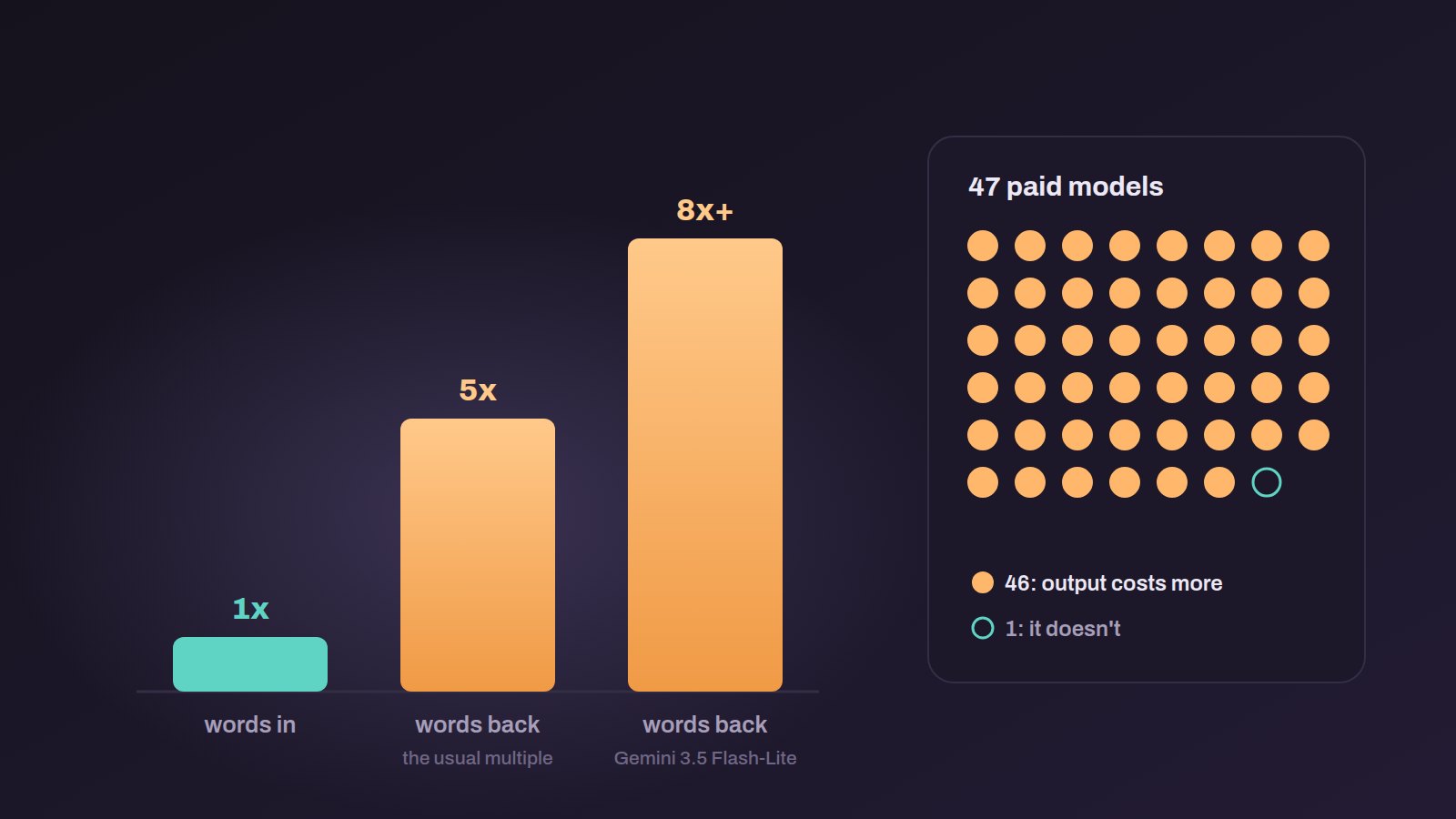
On 46 of the 47 paid models, the words you get back cost more than the words you send. The usual multiple is five. The steepest is Google's Gemini 3.5 Flash-Lite at more than eight.
That has a practical consequence. Trimming your prompt saves you very little. Asking for shorter answers saves you a lot. If you're trying to get a bill down, cap the output first.
The gap inside one lab beats the gap between labs
OpenAI's own range runs from 59 cents to $88.80. That's a wider spread than you'll find between most labs' equivalents. Anthropic runs $2.56 to $25.60. Google runs 74 cents to $5.92.
So "which lab is cheaper" is close to a meaningless question. Which model, within a lab, is the whole decision. Picking the flagship when a small model already passes your own check is where the money actually goes.
What a list price hides
Caching, batch discounts and volume agreements all cut the real bill, sometimes by half. None of them are in these numbers, because none of them are published in a way that compares across labs.
Introductory rates are the other trap. A price can be temporary and still be printed as the price. One lab has an increase already dated in its docs; another quietly made its introductory rate permanent instead. Both facts sit in the labs' own docs, and both would change a budget you wrote from a screenshot.
If you pay a monthly subscription, none of this is your bill
ChatGPT Plus, a Claude subscription, Gemini bundled into a Google plan: all flat fees, none of them affected by any number above. This table is the API, where you pay per token for what you actually use.
The two can be wildly different for the same person. Heavy chat use is cheap on a subscription and expensive on the API. A small automation that runs all night is the other way round.
These prices have a date on them
Every price above is what the labs listed on September 5, 2026. They move often, and one lab already has an increase dated in its docs, so check the lab's own pricing page before you budget against any number here.
We don't rank models by quality anywhere on this site. We haven't measured that, and a spec table can't. What it can settle is what each one costs, which is the half of the question that has an actual answer.