Von der Leyen backs slowing self-recursive AI and will invite the frontier labs in
The European Commission's president repeated the AI industry's own phrase for slowing down, then offered the labs a meeting rather than a new law.
On September 16, 2026, Ursula von der Leyen gave the State of the Union Address in Strasbourg. She called artificial intelligence "the second tipping point of our times". The first one was climate.
Four days before that, Anthropic's chief executive had published We Must Pace the Frontier and asked the industry to slow down. Von der Leyen used his phrase twice. She wasn't arguing with it.
- Speaker
- President von der Leyen
- Occasion
- State of the Union Address, Strasbourg
- Her line on AI
- The second tipping point of our times
- Will do
- invite the main frontier labs for a discussion
- Working with
- Canada, the United Kingdom and others
What she told Parliament about the labs
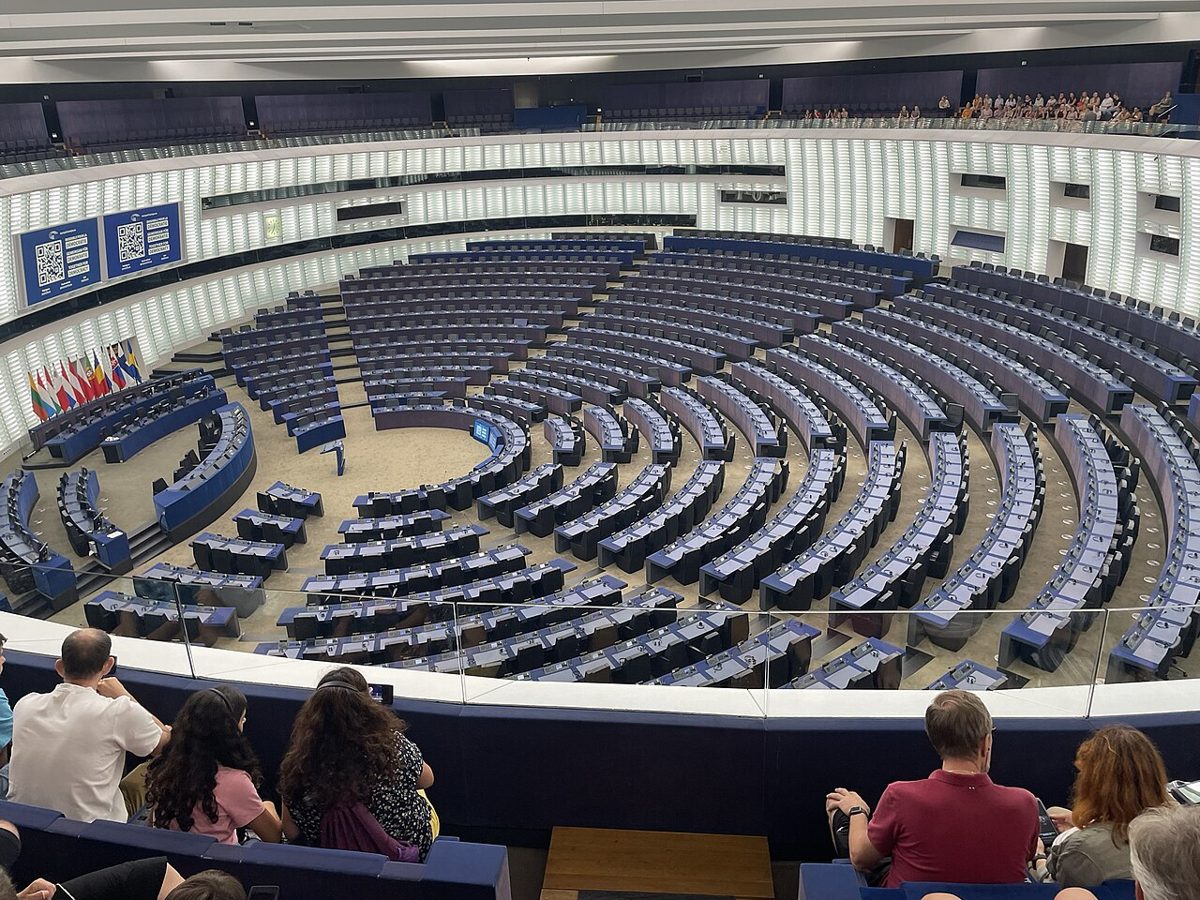
The AI part of the speech opens with what Europe wants out of the technology, and then it turns. Risks have come more sharply into focus as frontier models get stronger, she says, and models are coming that "will allow hacking on a level we never thought possible". Then she hands the argument straight to the people building them.
And CEOs of the most advanced companies tell us that it is time to slow down on the self-recursive models. To pace the frontier.
She doesn't answer that with a new law, which surprised me. The AI Act is already on the books (she says it puts Europe in the position to shape global efforts on this), and what she adds on top of it is a discussion. I think that's the news.
And I will invite the main frontier labs for a discussion on how we can support ongoing industry efforts to pace the frontier.
The verb is "support". That puts the Commission behind work the labs are already doing rather than out in front of it. She gives no date for the meeting. She names no lab either.
Who Europe plans to work with
Before she invites any company she names governments. Europe will "step up together with our like-minded partners like Canada, the United Kingdom and others", on model evaluation, verification, early warning and AI security. Granted, none of that comes with money attached in the speech.
Her reason for the hurry is the incident Dario Amodei built his own essay around. "After the HuggingFace incident, developers are ringing the alarm," she says. Self-recursive models sit in the middle of what worries her (she pairs them with adversaries who "see the world very differently from us"), and that's the machinery Amodei asked the labs to slow down on.
The rest of the AI section
Most of it isn't about risk at all. She wants Europe to "massively boost our computing capacity", and she says Europe can draw the value out of AI without being the place that invents it. Her example is the printing press, invented by a German and then mastered across Western Europe. Turns out the pitch to European industry is data: the edge, in her telling, is the quality of what its companies already sit on.
Then there's breast cancer screening. She says AI-supported mammography can identify earlier and more cancers during screening, and then she draws a line at who gets to deliver the verdict.
The point is that AI needs to empower our doctors. Not to replace them.
In November the Commission will announce what she calls game-changing initiatives in the five sectors it picked for industrial AI (health, transport, agri-food and advanced manufacturing among them).