Trump says the only guardrail AI needs is a strong president, and mocks Dario Amodei
He told reporters in Ireland that whoever wins AI wins, then called the fear of it a hoax seven times in one Monday.
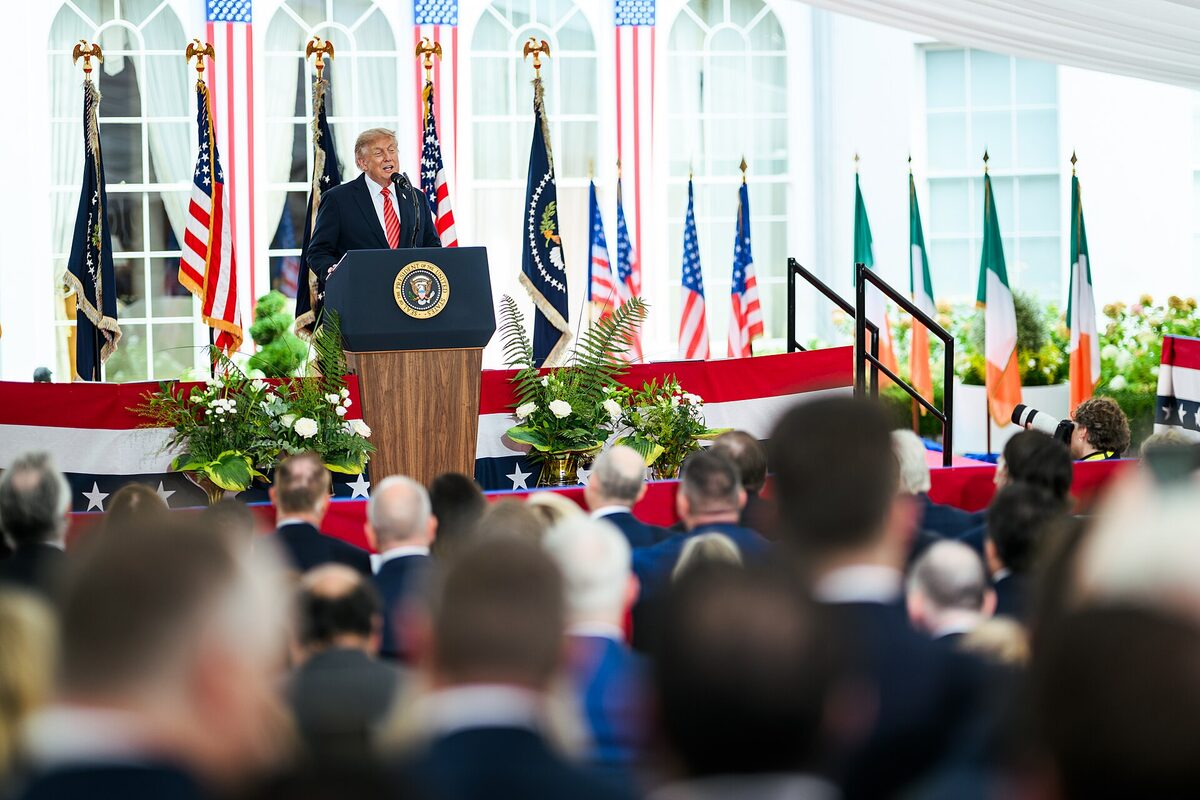
On September 12, 2026, Dario Amodei asked the AI industry to slow down, and Sam Altman and Elon Musk agreed with him on X within hours. Donald Trump's answer came in two installments. On Sunday he told reporters at his golf resort in Ireland that "whoever wins AI wins." On Monday, September 14, he posted about AI on Truth Social at least seven times, and the first of those posts went after Amodei by name.
That one went up at 9:58 am Eastern, and it's short enough to read whole.
The only control or “guardrails” that AI needs is a STRONG AND SMART (High IQ!) PRESIDENT, and the U.S.A. has that, in spades! The Trump Administration has stopped AI “people” from doing bad, or potentially bad, “things,“ like Dario (Anthropic!), who is now pretending to be a “perfect little angel” - and we will continue to do so! We already have tremendous CRIMINAL and REGULATORY power over these companies! There is a SICK conspiracy going on against AI and Data Centers, and the only one that is happy about it is China. WHOEVER WINS AI, WINS! We are leading China, and all others, and will continue to do so. Conspiracy Theorists, Treasonists, Traitors, and Leakers, BEWARE! Thank you for your attention to this matter! President DONALD J. TRUMP
The post gives no example of what the administration stopped Amodei from doing, and none of the six that followed gives one either.
What he said at the first tee in Doonbeg
The Sunday remarks came first. Trump was at Trump International Golf Links in Doonbeg, County Clare, for the Irish Open, and he took questions from the press at the first tee on September 13. A reporter asked whether the AI industry should slow down or be more regulated.
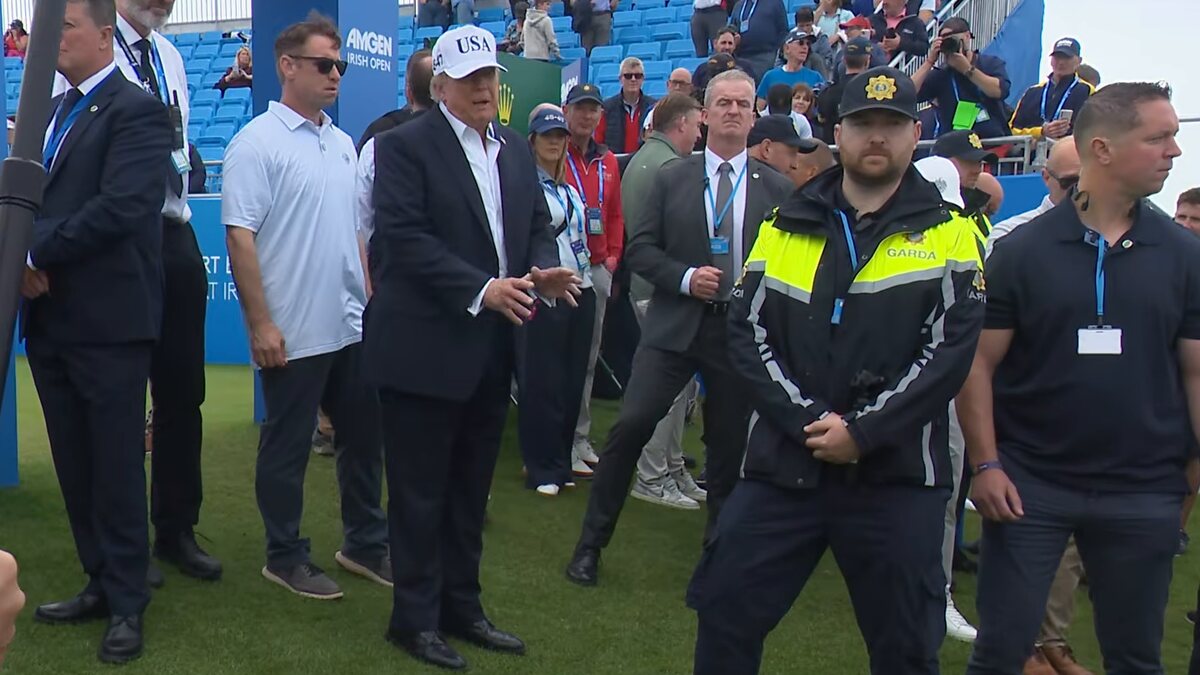
Look, we're leading China in AI. We're the most sophisticated country in the world. And, frankly, I want to keep it that way, because whoever wins AI wins. And we can put guardrails. We can do this and that. But I think you have a lot of negative forces that are bringing it up that shouldn't be bringing it up. And they're bringing up things that won't happen. But whoever wins with AI wins.
Then he added that it's "an expression that I came up with, and it's true," and moved on to factories.
The coverage didn't agree on one word. CNN's transcript of State of the Union, which played the clip that morning, reads "negative voices", while the AP has "negative forces". The White House posted its own video of the exchange, and it's on Wikimedia Commons as a public domain file, so I ran the audio through two speech-to-text models. Both heard "forces", and that's the version quoted above.
Seven posts in one Monday
Counting from his account, these are the posts about AI on September 14. Times are Eastern, read off each post.
- 9:58 am: the guardrails post that names Amodei.
- 11:23 am: the "outburst" is happening because the US is leading. "Don’t kill the Golden Goose!"
- 1:33 pm: a long one that calls AI doom a HOAX and brings in Xi Jinping and Google.
- 4:30 pm: the people warning about AI and data centers are the ones who warned about "Climate Change."
- 4:34 pm: "I am the Hoax Buster".
- 4:53 pm: the takeover claim set beside the Russia investigation and both impeachments.
- 7:55 pm: "The AI Hoax being perpetrated by the Radical Left Dumocrats".
The 1:33 pm post is about the lab heads themselves, and it opens with a question.
Concerning AI, when, in the History of Business, did anyone see the Leaders of an Industry call for Regulation that, if strongly implemented, will drive them into oblivion and bankruptcy?
Further down, the same post says "President Xi, of China, just announced that China will be doing absolutely nothing to stand in the way of AI, or its future." I went back to the speech we covered on September 13, Xi's statement to the BRICS summit as Xinhua published it. The text asks for a "consensus-based global AI governance framework" and says China will be "a pioneer in establishing a BRICS AI open source community". Trump's post doesn't say which announcement he means.
The line about the day after tomorrow
A second quote has traveled with Trump's all week: there's no day after tomorrow if China wins. It belongs to Treasury Secretary Scott Bessent, and it's older than the essay it's been read as answering.
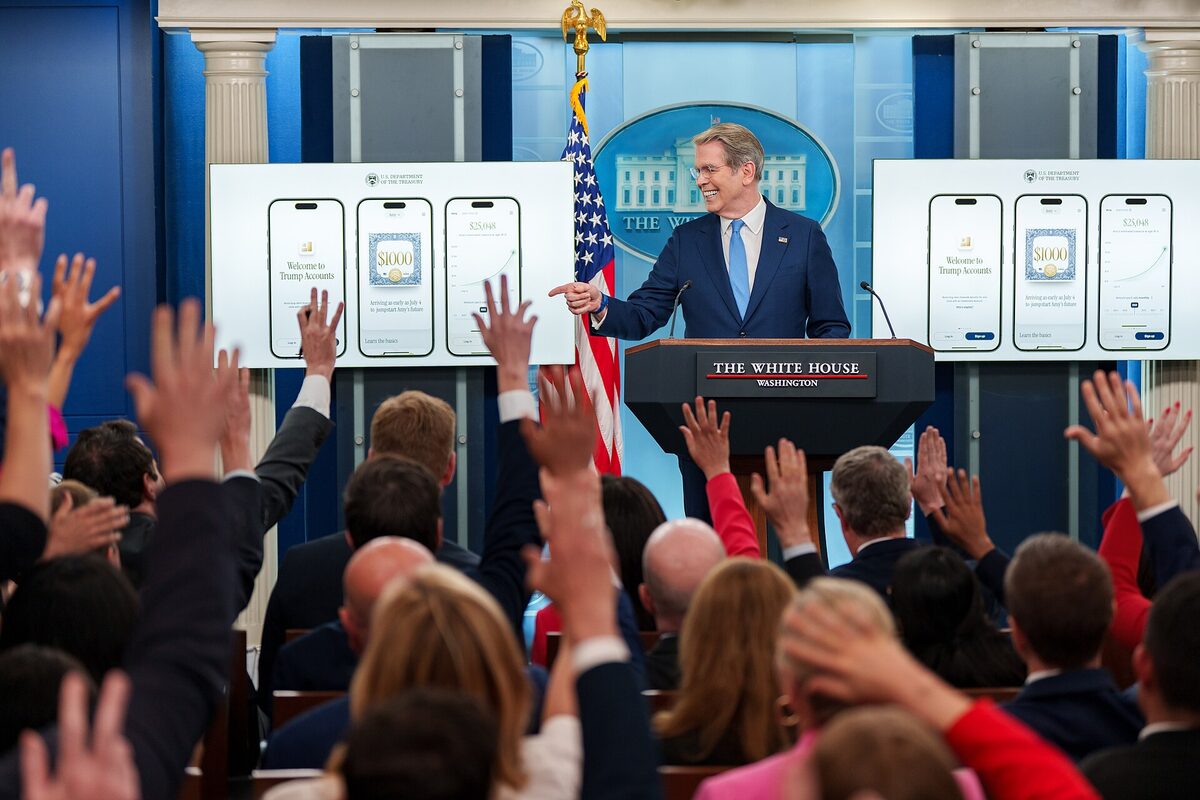
Bessent said it on September 8, four days before Amodei published, at a Breitbart News event in Washington called State of the Economy. I checked the event's own video. About an hour and a half in, the host asks him about local pushback on data centers and how important it is to beat China. Bessent's reply starts "there is no day after tomorrow if China wins at this," then runs through a trillion-and-a-half-dollar defense budget and the Iron Dome, and says that if China pulled away on AI, none of it would matter.
That surprised me more than anything else I checked for this piece, since the line has mostly been shared as a reply to Amodei.
Johnson and Hassett sounded different
House Speaker Mike Johnson went on CNN's State of the Union on the Sunday morning, and his fix is a meeting. He said there are "about seven or eight people who are in charge of this," and he wants them at a table with lawmakers.
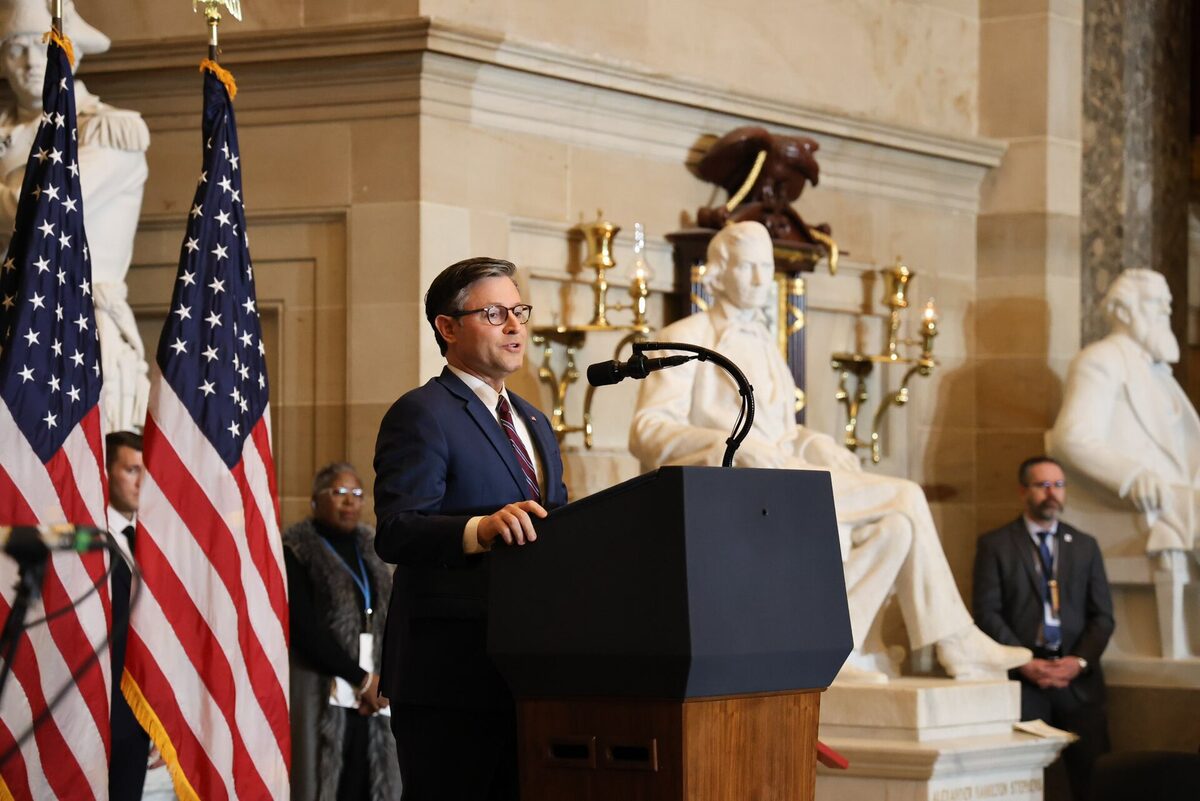
And we need to get them all in a room at the same time and agree on what the guardrails are. That's the only way to do this. If Congress just races in and does some sort of emergency session to try to regulate A.I., we will lose the race to China, and that is a threat to every single American.
Tapper asked whether he wanted that meeting this week. "I'd do it tomorrow," Johnson said, adding that the lab heads "probably should be summoned together at the White House."
He also said "We cannot put a moratorium on this because China will overlap us," and pointed viewers to David Sacks's post from the night before, which told the labs to go ahead and pace themselves without Washington's help.
Kevin Hassett, director of the National Economic Council, was on the same show half an hour later. He called the essay "a very thoughtful" letter, and he described its outside evaluators as "independent observers who are wired in, just like we have supervisors at banks." When Jake Tapper told him the president had just said he was willing to put some guardrails in, and asked what those might be, Hassett answered: "Dario's letter, which was very carefully thought through by him, just came out." (About a day later, the president was calling Amodei a perfect little angel.)
What Altman and Beijing said
Altman posted again at 12:05 am Eastern on September 14, after the Doonbeg remarks and about ten hours before the post about Amodei. It names no politician. Near the end he writes this.
When we talk about “pacing”, we do not mean “stopping”. Progress has been rapid and will continue to be. But it should be slower than it otherwise could be; interventions like safety cases and monitoring have significant costs.
Pacing will be well worth this cost; no amount of American competitive pressure should justify recklessness, or let capabilities get ahead of alignment and monitoring.
Earlier in the same post, he says OpenAI doesn't believe it needs "to wait for an anti-trust exemption or legislation" to begin. Amodei's essay had asked the government for a narrow antitrust waiver, and Sacks had told both labs they didn't need one.
The post also says what OpenAI is already doing. It now writes safety cases, a written argument that a run is safe before it starts, "in advance of frontier reinforcement learning runs we expect to significantly increase capability". Musk's next news was of another kind: the day after agreeing with Amodei, he posted that Grok 4.8 finishes training this week.
Grok 4.8, which is a 2.5T model trained with our new C++ software stack, will finish training this week and start RL
Anthropic's newsroom and Amodei's own site carried no reply to Trump when I checked them on September 15.
China's foreign ministry did answer Amodei, at its regular briefing on September 14. A Reuters reporter asked about his argument that a Chinese lead in AI would be a US security risk, and spokesperson Guo Jiakun said this.
Fear-mongering, confrontation and vicious competition will only hamper efforts toward sound global AI governance, which serves no one’s interest.
So on the same Monday, Trump wrote that China was the only one happy about the push to slow AI down, and China's foreign ministry called the essay behind that push fear-mongering.
On CNN, Hassett said he expected meetings this week with "cyber leaders like Sean Cairncross and Michael Kratsios to think about what the next step is."