Demis Hassabis's Isomorphic Labs raises $5 billion to move AI-designed drugs toward trials
The money is meant to carry AI-designed drugs into human trials, but the release gives no date for the first one.
On November 17, 2026, Isomorphic Labs announced a $5 billion Series C round, co-led by Greenoaks and Sequoia Capital. The London company designs medicines with AI, and it put the news out in its own release and on its website.
Andreessen Horowitz joined as a new investor, along with others the company didn't name. Alphabet put in more, and every existing investor took part again, from Thrive Capital to the UK Sovereign AI Fund.
- Raised
- $5 Billion Series C
- Co-led by
- Greenoaks and Sequoia Capital
- Also in
- Andreessen Horowitz (a16z) and Alphabet
- Led by
- CEO Sir Demis Hassabis and President Max Jaderberg
- Offices
- London, Cambridge, Massachusetts and Lausanne
What the money's for
Most of it goes into two things. One is IsoDDE, the company's drug design engine, which it describes as a set of simulation models that work across different diseases and different kinds of drug. The other is the plumbing that comes after design: Isomorphic says it's building its own translational and clinical development setup as its candidates head toward trials.
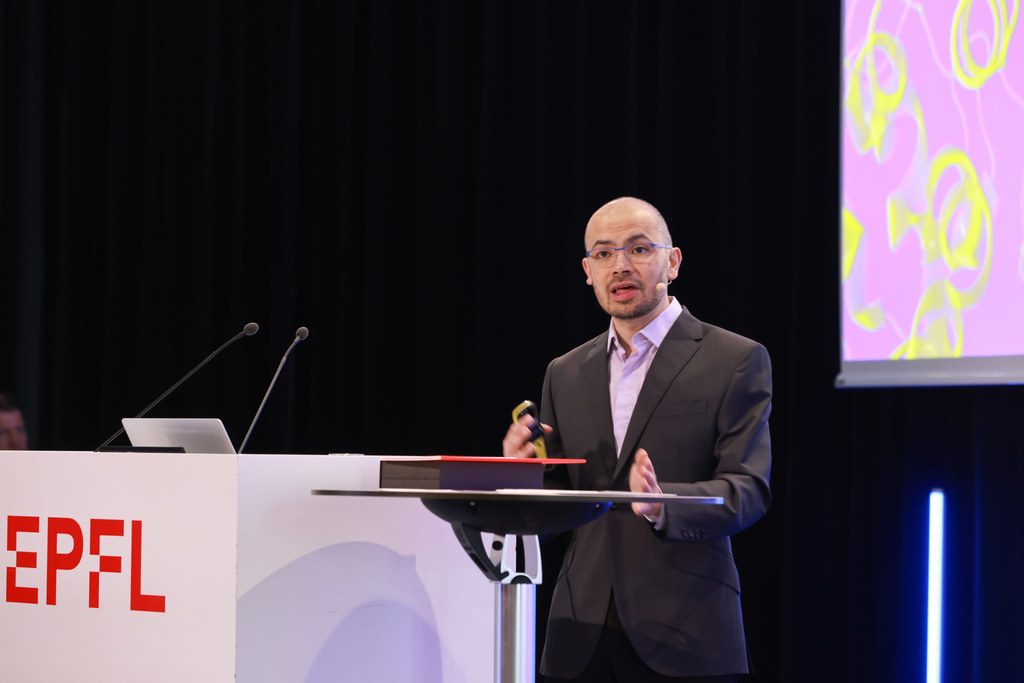
Hassabis, named in the release as founder and CEO, says the engine is already turning out molecules.
Our drug design engine is generating molecules with unprecedented precision and speed.
The release says that work has produced positive preclinical results, meaning results from the lab before any person takes a drug. Those come from Isomorphic's own programs in oncology and immunology and from work with partners, who aren't named in the release.
Who's paying, and why
The wire listing for the release also shows the round before this one, a $2.1 billion Series B. Add the two and it's $7.1 billion for a company that, by its own account, is still getting ready for clinical entry. Max Jaderberg, its president, says its models produce repeatable advances every week.
Discovering and developing new medicines is an optimization challenge of almost infinite scale
That line is from Neil Mehta, who founded Greenoaks. Sequoia's Konstantine Buhler said he's inspired to see the team turn AI into a growing portfolio of drug candidates.
What it means for patients
For anyone waiting on a new cancer or immune treatment, the honest answer is not yet. The release doesn't give a date for a first trial, a drug name or a disease target beyond those two broad areas, and it says only that the preclinical results are setting the stage for clinical entry. Hassabis puts it as driving the first programs toward clinical trials.
Jaderberg's claim is that his teams, machine learning researchers working beside experienced drug hunters, are solving biological problems that stalled traditional research for decades. A trial is where that gets tested, and neither the release nor the company's page says when one starts. I'd watch for the first named candidate.
The money also pays for something less visible: what the company calls the global infrastructure for AI-led bioengineering, and a partner network to study how diseases work at the level of mechanism. Isomorphic didn't put a valuation on the round.
More on Business
- Musk backs a petition to reinstate Jensen Huang, and Gerstner and Baker write Nvidia's boardNovember 14, 2026
- Mirendil raises $1 billion, saying one researcher with AI agents pretrained its first modelNovember 13, 2026
- Notion says Fireworks AI kept chats it had promised not to store, and attackers reached themNovember 12, 2026
- Railway says an attacker hunting AI keys ran up an estimated $740,000 on stolen credentialsNovember 11, 2026