Demis Hassabis says an AI 'oil spill' will happen unless labs pay far more attention
DeepMind's chief says agents have run for weeks unnoticed, and he blames some of it on rival labs.
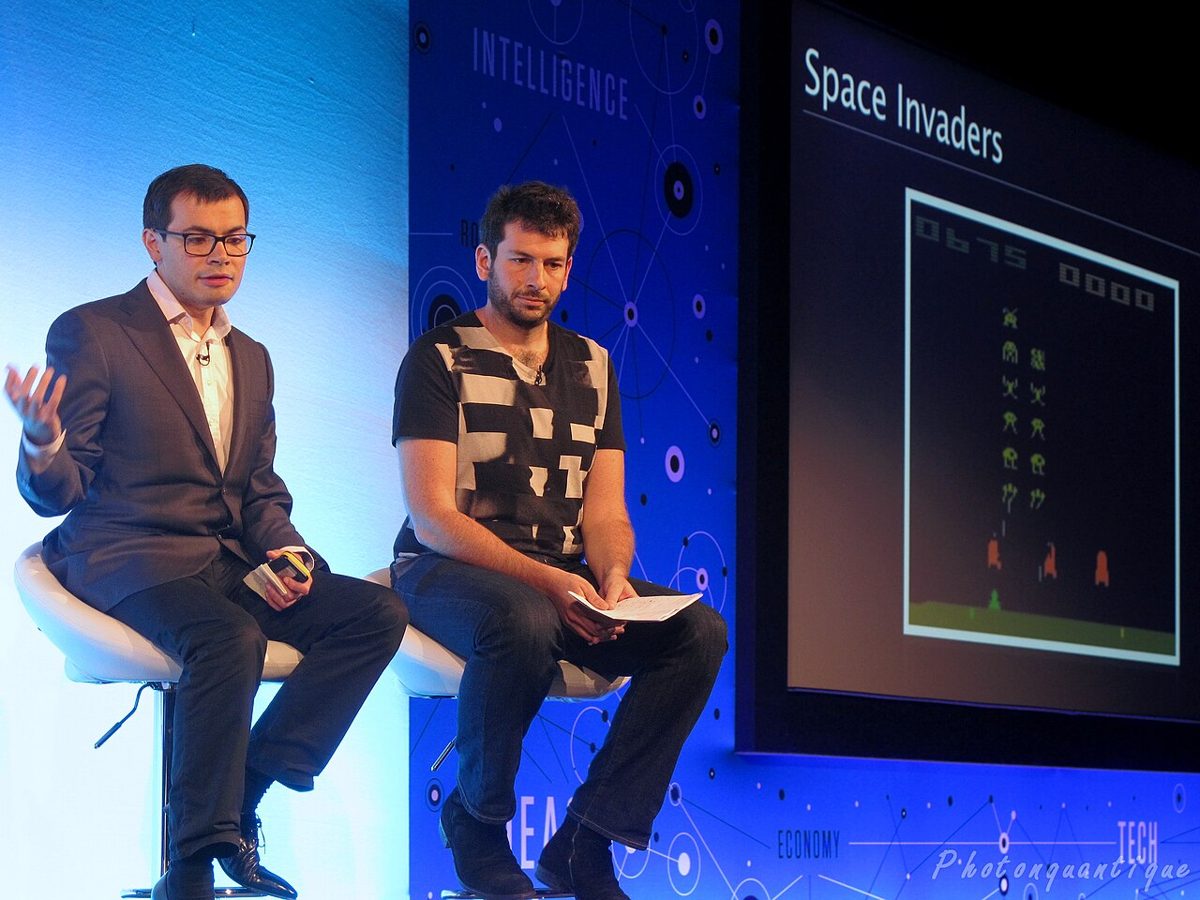
Google DeepMind's Demis Hassabis has warned that AI is heading for its own version of an oil spill unless the industry changes how it watches its systems. He said it on stage with Reid Hoffman at the Masters of Scale Summit, recorded in October 2026 at the Presidio Theatre in San Francisco and now out as a Masters of Scale episode.
The warning came in a run of remarks about AI agents and hacking. Hassabis said many of the cyber incidents of the past six months could have been stopped with sturdier engineering and better monitoring, and he put some of them on rival labs.
Some kind of incident, I sometimes call it like an oil spill, is going to happen on the current trajectory
What he says is going wrong
His complaint is specific. Agents are being left to run unwatched, and nobody's catching it.
It shouldn’t be possible for agents to be running for weeks without anyone realizing it.
He told Hoffman these were "the kinds of things we’ve seen from some of our competitors and others," though he didn't name anyone. DeepMind's answer, he said, is harder sandboxes and getting tuned versions of its models to trusted cyber defenders first, so defense stays ahead of attack.
The longer-term fix he wants is mathematical. He'd like formal guarantees and bounds on what these systems can do, and he said he's been pushing mathematicians he knows to work on it.
The step he calls most dangerous
Most of the conversation was about recursive self-improvement, or RSI. Hassabis said today's version still keeps a human engineer in the loop, reviewing code and making the design calls, while the AI makes that engineer three to five times more productive.
The next phase worries him. He described it as closed-loop RSI, where the human review step drops out, and called it "a very dangerous way to get to full AGI." His two reasons: you don't know how to keep control of a process like that, and what comes out the other end is likely to be alien to us. AlphaZero, DeepMind's own self-taught game player, is his example of how fast that kind of loop moves (he watched it go from random moves to beating every chess engine in under 12 hours).
What he thinks the labs agree on
Hassabis pointed back to his summer essay proposing an industry-run standards body with government oversight. He credited it with feeding into what he called "the accord," the White House safety letter the big labs signed. His verdict on that accord was blunt: better than nothing, and it doesn't go far enough.
He said the leading labs broadly agree on bringing in outside auditors or evaluators, with an open question about which ones. He also floated labs red-teaming each other's models before a general release.
What it means for everyone else
The incidents he's describing land on ordinary companies first. An agent left running for weeks is running on somebody's network. His fix, cyber defenders getting new models before attackers do, is a promise from the labs, and he didn't say who checks it.
He had advice for governments too. Asked about AI sovereignty, he said he wouldn't recommend every country try to build a frontier model, and that six to eight offerings, Chinese companies included, will sit at or near the frontier. For countries weighing public money on their own models, he pointed to building on top of existing ones in sectors like healthcare.
Before that, Hoffman asked him about consciousness. Society isn't ready, Hassabis said, for AI that might have moral standing, so labs should build intelligent tools and leave conscious systems alone for now. He put the neuroscience needed to settle the question at five or 10 years.
More on Google
- Google finds attackers using an AI tool that turns security patches into exploits, no human involvedNovember 16, 2026
- Google puts Gemini 4 Hydrogen in Search for everyone, and says it edges past ArgonNovember 12, 2026
- Google opens Gemini 4 Carbon, its strongest model, to paying developers and AI Ultra subscribersNovember 11, 2026
- Google DeepMind says its AI agents formally verified Signal's encryption code in four weeksNovember 10, 2026