Eleven problems that would change everything, and the one that could crack the rest
Fusion, gene editing, cancer, warp drives and seven more, ordered by how close they really are, with what each would change and what's in the way.
I started this list expecting to write about breakthroughs, and spent most of the reading correcting headlines. Fusion "broke even" in 2022 in a way that leaves out the 300 megajoules the building pulled from the grid. The first approved CRISPR treatment doesn't repair the gene everyone assumes it repairs. The famous room-temperature superconductor was an honest mistake about a copper impurity. And every tonne of carbon the removal industry has ever delivered adds up to about 23 minutes of the world's emissions.
None of that makes these problems less worth solving. It makes the honest version of the list more useful than the exciting one. Here are eleven, closest first, with what each would change for ordinary people and what's in the way. The twelfth is the one that might unlock the others.
- Teaching the immune system to kill cancerapproved
- Rewriting the genes you were born withapproved
- Kidneys grown in pigsin trials
- Reading speech out of a paralyzed brainin patients
- Designing proteins nature never madeone product
- Taking carbon back out of the airrunning, tiny
- Fusion powerlab
- Quantum computers that don't make mistakeslab
- Slowing aging itselffirst human dose
- Wires that lose nothingnot found
- Faster than lightno known physics
- General AI, the key to the rest
1. Teaching the immune system to kill cancer
Approved for some blood cancers
Your immune system already destroys stray cancer cells. The tumors that survive are the ones that learned to hide. This work shows the immune system what to hunt, either through CAR-T therapy, a patient's own immune cells re-engineered in a lab and put back, or through a vaccine built from the mutations in one person's tumor.
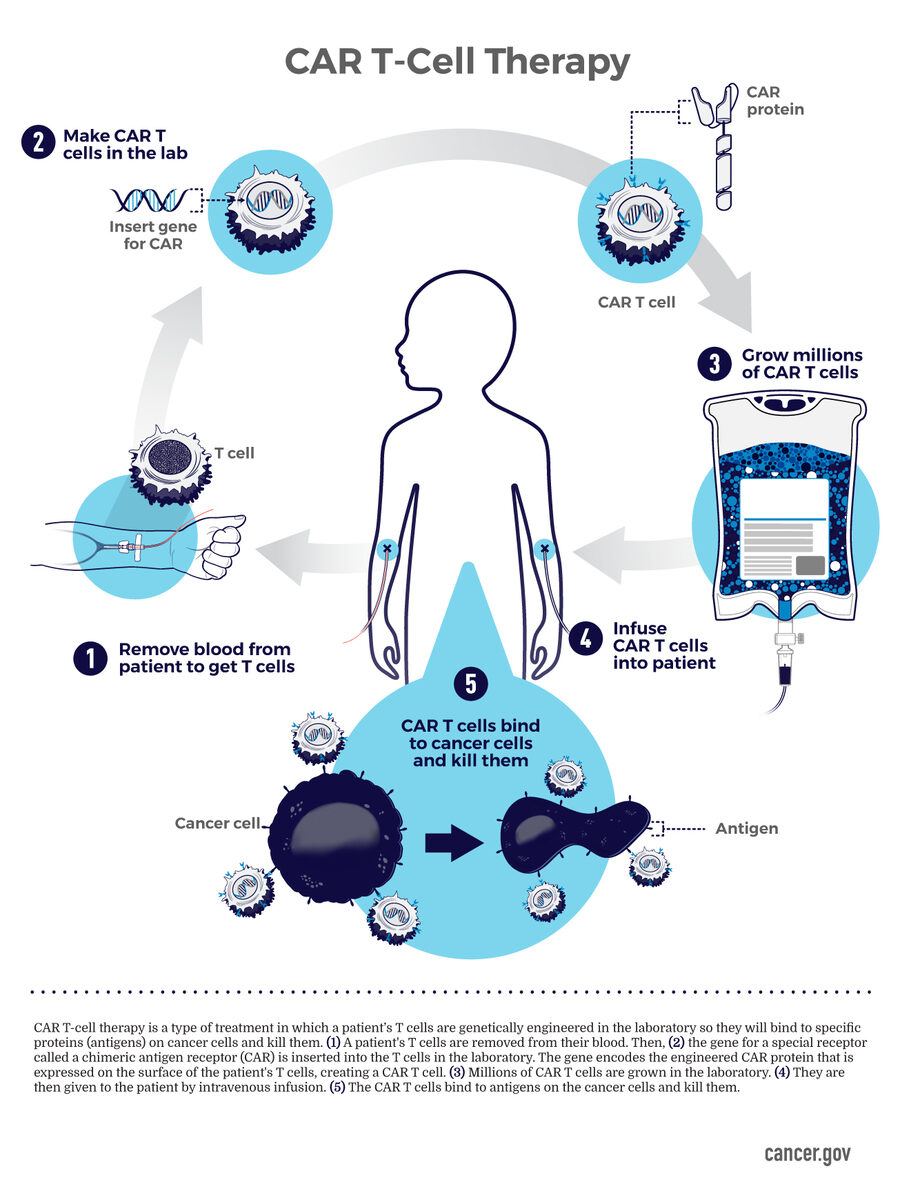
In blood cancers it already works. In the pivotal trial for one lymphoma treatment, patients whose cancer had beaten everything else were followed for five years, and 42.6% were still alive. Two leukemia patients treated at Penn in 2010 were still in remission more than a decade later, from a single infusion.
August 2026 was a strange month for the vaccines. On the 19th, Moderna and Merck said their personalized mRNA melanoma vaccine hit its main goal in a Phase 3 trial of more than a thousand patients, a first for any mRNA cancer treatment. They didn't say by how much. Nine days later BioNTech shut down its own personalized vaccine trial in colorectal cancer, after an interim look found it wasn't working.
Solid tumors are the wall. Lung and pancreatic cancers have no single clean target, and they switch T cells off once they arrive. The first CAR-T approved anywhere for a solid tumor came from China in June 2026, for stomach cancer. Price is the other wall: the same kind of treatment that runs $550,000 to $850,000 in the US costs $150,000 to $230,000 in China.
2. Rewriting the genes you were born with
Approved, reaching dozens of people a year
Many inherited diseases come down to one misspelled gene. CRISPR lets doctors edit the spelling, which could turn a lifetime of treatment into a single visit.
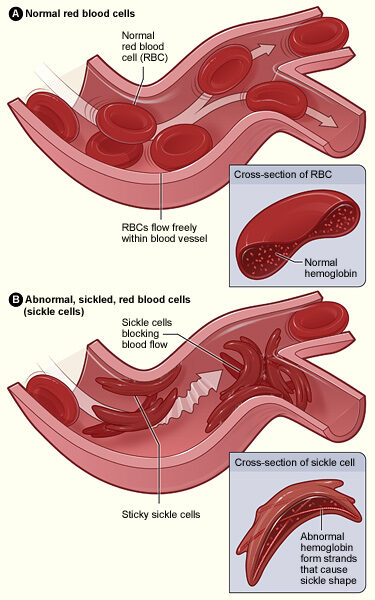
The first CRISPR treatment, Casgevy, was approved in the US in December 2023 for sickle cell disease, at $2.2 million. I'd assumed it repaired the sickle cell mutation. It leaves that gene alone. It switches back on the fetal form of hemoglobin the body normally stops making in infancy, and that form does the job instead.
Hardly anyone has had it. Vertex infused 64 patients in all of 2025. The process is the bottleneck: stem cells are collected, edited in a lab, and returned only after chemotherapy wipes out the patient's bone marrow.
Newer tools edit inside the body instead. In February 2025 doctors in Philadelphia treated a baby named KJ Muldoon, then about seven months old, with a base editor made for his mutation alone. By March 2026 he was walking and handling far more protein than his liver disorder should have allowed. In May 2026 Lilly reported that one IV dose of a different base editor cut LDL cholesterol by up to 62% for as long as 18 months, in an early trial of 35 people.
The risks grow with the patient count. In late 2025 the FDA paused Intellia's late-stage trials after a patient developed severe liver injury, and that patient later died. Editing embryos, so a change passes down to children, is banned in China, where a scientist did it in 2018 and went to prison.
3. Kidneys grown in pigs
In clinical trials
More than 100,000 people in the US are waiting for an organ, most of them for a kidney, and the federal organ donation site says 17 die each day waiting. Human donors will never close that gap. Pigs gene-edited so a human body is less likely to reject their organs might.
The first pig kidney went into a living patient, Richard Slayman, in March 2024. He died two months later of a heart problem, with no sign the kidney was being rejected. Towana Looney kept hers for 130 days. Tim Andrews went 271 days without dialysis on a pig kidney, then in January 2026 got a human one, the first person to use a pig organ as a bridge to a human transplant.
Formal trials started in November 2025, with the first trial transplant at NYU Langone. Every pig organ put into a living person so far has eventually failed or come out, and rejection tends to flare whenever doctors ease off the immune-suppressing drugs. For now a pig kidney buys time. Nobody has kept one for good yet.
4. Reading speech out of a paralyzed brain
In about fifty people, none of whom bought it
A brain-computer interface reads the firing of neurons and turns it into something a computer can act on. For someone locked in by ALS or a brainstem stroke, it's the difference between silence and a conversation.
The cursor demos get the attention. The speech work is the part that matters. In August 2023 a UCSF team decoded attempted speech from a paralyzed woman at 78 words a minute, about half the pace of normal talk, with roughly one word in four wrong. A year later an ALS patient named Casey Harrell was holding 97.5% word accuracy over eight months, and used it to talk to his daughter.
In 2025 Stanford decoded inner speech, words a participant only thought, at up to 74% accuracy. The researchers knew what they'd crossed, so they added a mental password that keeps the decoder off until the person chooses to use it.
Neuralink's first patient lost 85% of his electrode threads within weeks because his brain moved about three times more than the company expected. The fix was software: a decoder that reads groups of neurons instead of single ones. He ended up faster than before, with no second surgery.
Two things got lost in the coverage. Nothing here is approved or for sale anywhere, and roughly fifty people live with a long-term implant. And the field is older than it looks: BrainGate put an array in a paralyzed man's brain in 2004. What stops it spreading is the body itself, which scars around the electrodes until the signal fades.
5. Designing proteins nature never made
One approved product so far
Most of what your body does is done by proteins, long chains that fold into precise shapes, and the shape decides the job. Designing new shapes on a computer means medicines and enzymes built for one purpose, instead of found by luck.
Predicting how a protein folds was an open problem for about fifty years. DeepMind's AlphaFold2 cracked it in 2020 and has since predicted the structure of virtually all 200 million known proteins. That, along with David Baker's work designing proteins from scratch, won the 2024 Nobel Prize in Chemistry.
The designs have left the computer. In June 2022 South Korea approved SKYCovione, a COVID vaccine built on nanoparticles designed at the Institute for Protein Design in Seattle, the first medicine made from computationally designed proteins. In January 2025 designed proteins protected mice from a lethal dose of snake venom toxin, even when given 15 minutes after it.
What's slow now is everything after the design. A protein that binds perfectly on screen still has to prove it's safe and stable in people, which takes the usual decade of trials. That's why a field that designs binders routinely has one approved product.
6. Taking carbon back out of the air
Running, and thousands of times too small
Cement, steel, fertilizer and long-haul flights all emit carbon with no clean swap ready, and everything already emitted is still up there. Pulling CO2 back out is the only fix for either, which is why nearly every serious climate plan quietly assumes a lot of it.

This is the number that reset my expectations. Everything the durable carbon removal industry has ever delivered, from every company, adds up to 1.68 million tonnes. The world emits 38.1 billion tonnes of fossil CO2 a year. So all of it, ever, is about 23 minutes of emissions.
Buyers have paid for about 49.5 million tonnes. Around 3.4% has shown up. The largest direct air capture plant running, Climeworks' Mammoth in Iceland, captured 675 tonnes in the first half of 2026. That was six times better than a year earlier, and still under 4% of what the plant is rated for.
The cheaper routes don't involve machines. Most removal so far is biochar, farm waste charred and buried. Crushed basalt spread on fields absorbs CO2 as it weathers and improves the soil, at about $300 a tonne against a $100 target. What keeps that price up is proving the carbon really went somewhere.
7. Fusion power
Lab result, nowhere near paying for itself
Fusion is what powers the sun: force light atoms together and they merge, releasing energy. A fusion plant would run day and night on hydrogen isotopes, with no carbon and no waste that stays dangerous for thousands of years.
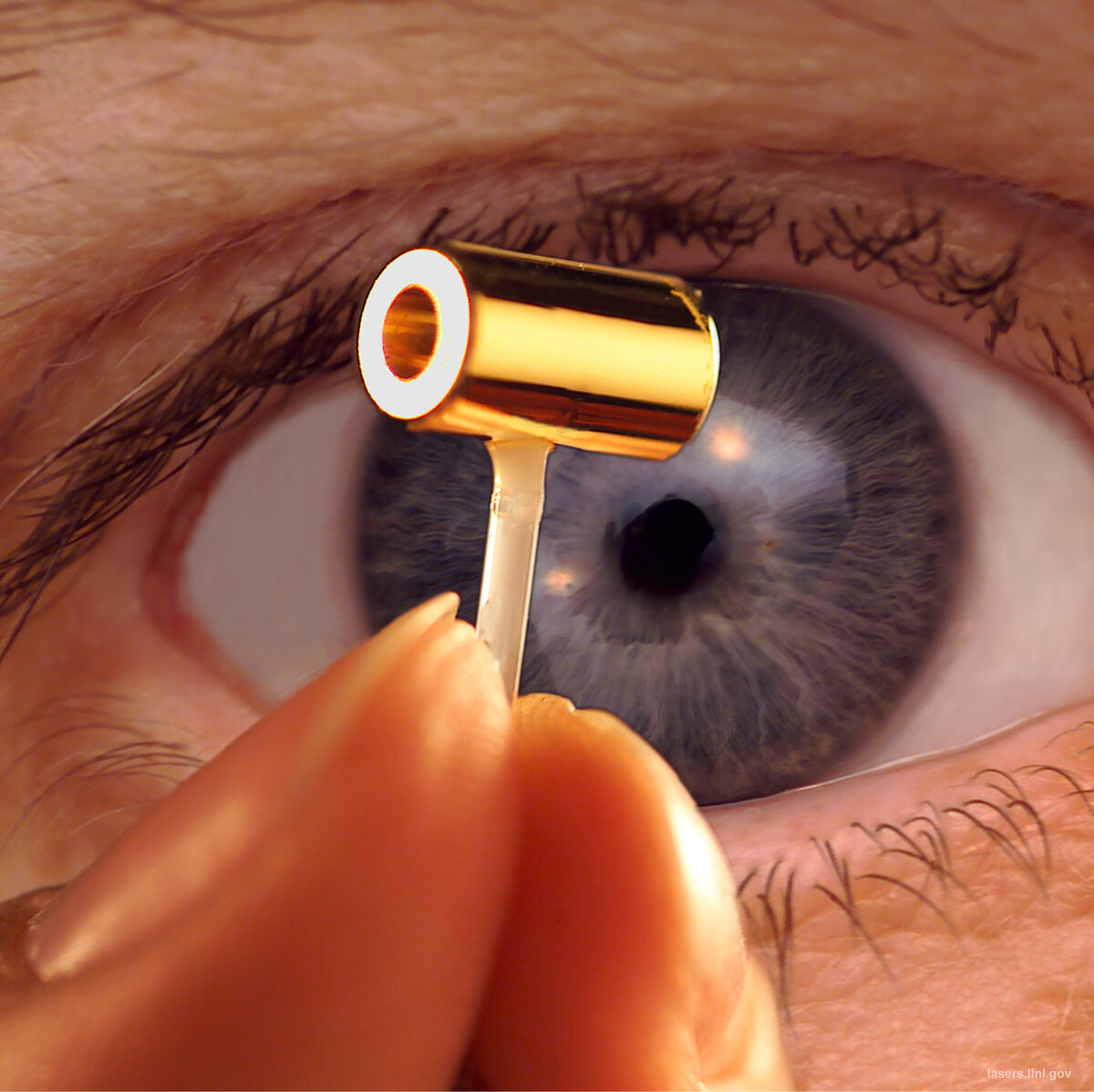
In December 2022 the National Ignition Facility in California got more energy out of a fuel pellet than its lasers put in: 3.15 megajoules from 2.05. That was real and a first. It also left out that making those 2.05 megajoules of laser light took around 300 from the grid. The record shot since, 8.6 megajoules in April 2025, still returns about 3% of what the building uses.
Private money hasn't waited. Fusion companies have raised $14.24 billion, and Commonwealth Fusion is aiming for net energy from its SPARC machine around 2027. Watch the wording as deadlines close in. In September 2026 Helion changed its prototype's stated goal from "net electricity" to "demonstrating electricity from fusion", which is a far easier bar.
The quiet obstacle is fuel. Plants would burn tritium, and the world's civilian supply is roughly 20 to 30 kilograms. Every plant will have to breed its own from lithium, and nobody has done that in real fusion conditions yet.
8. Quantum computers that don't make mistakes
Lab, with error correction just starting to work
A quantum computer could simulate molecules exactly, where ordinary computers can only approximate. That's a route to better batteries and fertilizers. It could also break most of the encryption the internet runs on.
The problem is noise. Qubits lose their information constantly, so a useful machine has to spread each reliable qubit across many physical ones and keep correcting them. In December 2024 Google's Willow chip showed that can work: each time it used more physical qubits per reliable one, the error rate more than halved.
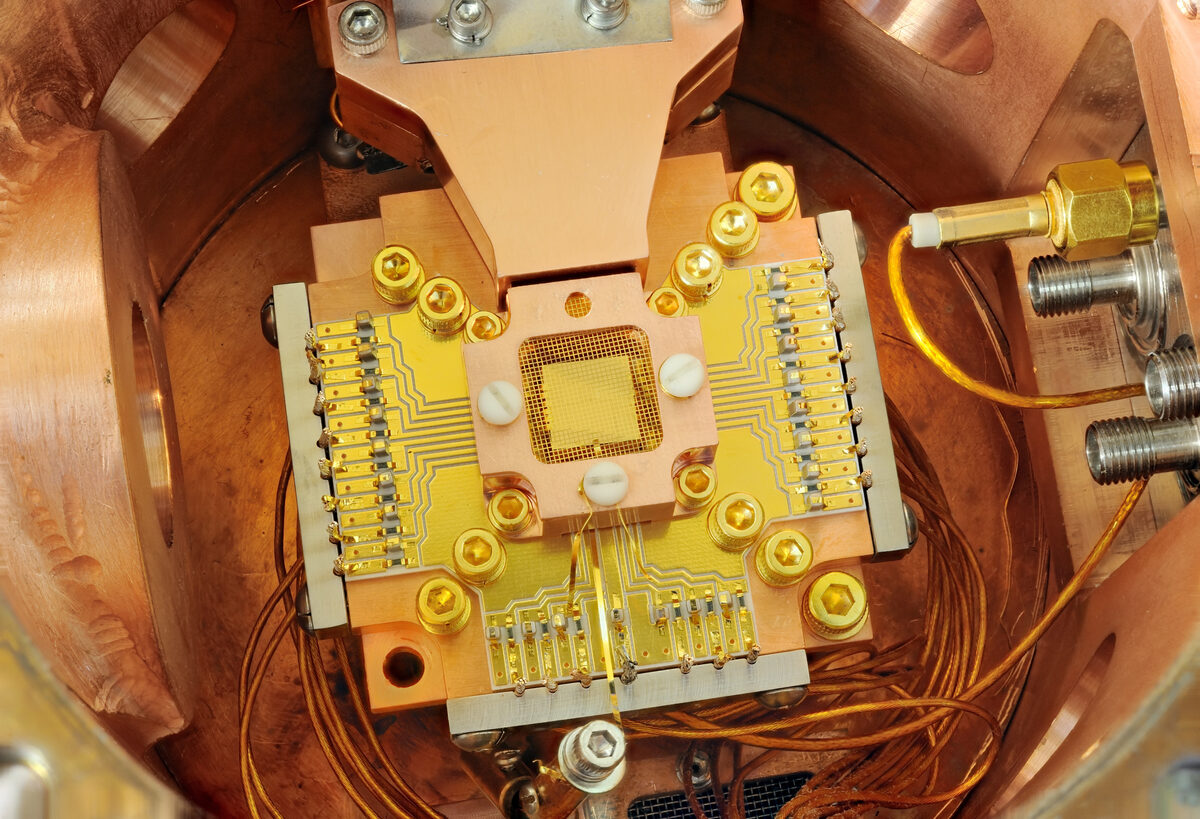
That demo spent 101 physical qubits to hold one reliable qubit, and it only stored information without computing anything. Its error rate was about one in 700 per cycle, and useful algorithms need something closer to one in a million. IBM says it will have about 200 reliable qubits running by 2029.
The encryption worry moved closer in May 2025, when Google's Craig Gidney estimated a standard RSA-2048 key could be broken in under a week with fewer than a million noisy qubits. His 2019 estimate was 20 million. Today's biggest machines have hundreds to about a thousand. The US finalized replacement encryption standards in August 2024, so the fix exists before the threat does, even if most systems haven't switched.
9. Slowing aging itself
First human dose in June 2026
Age is the biggest single risk factor for most of the diseases that kill people in wealthy countries, from heart disease to dementia. Slow aging and you push all of them back together, instead of fighting each one separately.
The best result is in mice. In 2024 a company called Rejuvenate Bio used gene therapy to switch on three of the Yamanaka factors in very old mice, roughly 77 in human years. Their remaining lifespan more than doubled. That's less dramatic than it sounds: counted from birth, they lived about 7% longer, and the group was small and all male.
The trick is switching those genes on only partway. Run them fully and cells forget what they are and can form tumors. On June 9, 2026, Life Biosciences gave the first human dose of a partial reprogramming therapy, injected into one eye to treat vision loss. It's a safety trial, with no results yet.
A lot of what gets said about anti-aging drugs in people is ahead of the evidence. TAME, the metformin trial often described as underway, has never enrolled a patient, and its organizers are still raising money. Altos Labs launched in 2022 with $3 billion and has no confirmed human trial. Part of the holdup is that regulators don't treat aging as a disease, so every trial has to aim at something narrower, like an eye.
10. Wires that lose nothing
No room-temperature superconductor exists yet
A superconductor carries electricity with zero loss. About 5% of US electricity disappears as heat between power plant and socket. A superconductor that worked at room temperature would recover that, and make MRI scanners that don't need liquid helium, which is a large part of why scans cost what they do.
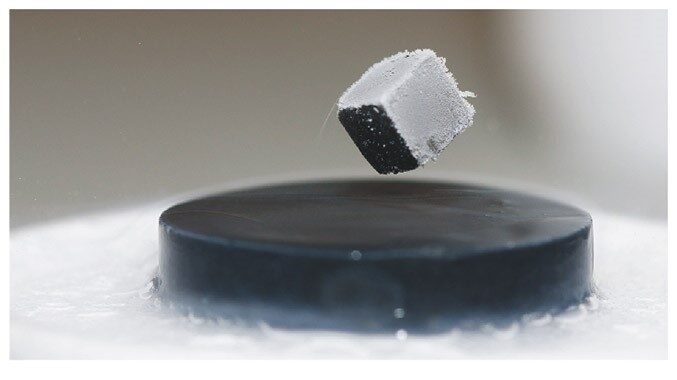
You probably remember LK-99 from summer 2023. It wasn't a hoax. The Korean samples contained copper sulfide, which changes structure at about 104°C and drops its resistance a thousandfold, a jump that looks almost exactly like superconductivity on a graph. Purified, LK-99 turned out to be an insulator.
The other big claim was worse. Ranga Dias at the University of Rochester published room-temperature results in 2020 and 2023. Both papers were retracted, an investigation found falsified data, and he was gone from the university by late 2024.
The real record is lanthanum hydride at about −23°C, but only when crushed to 1.7 million atmospheres between two diamonds, roughly half the pressure at Earth's core. Let go and the material stops existing. The more hopeful route is a family of nickel oxides that superconduct at normal air pressure. In 2026 they reached 63 kelvin, which is about −210°C, and still a long way off room temperature.
11. Faster than light
No known physics allows it
This one belongs on the list because it would move humanity's address. Proxima Centauri would stop being a multi-generation voyage and become a trip. It's also the one where I have to be blunt.
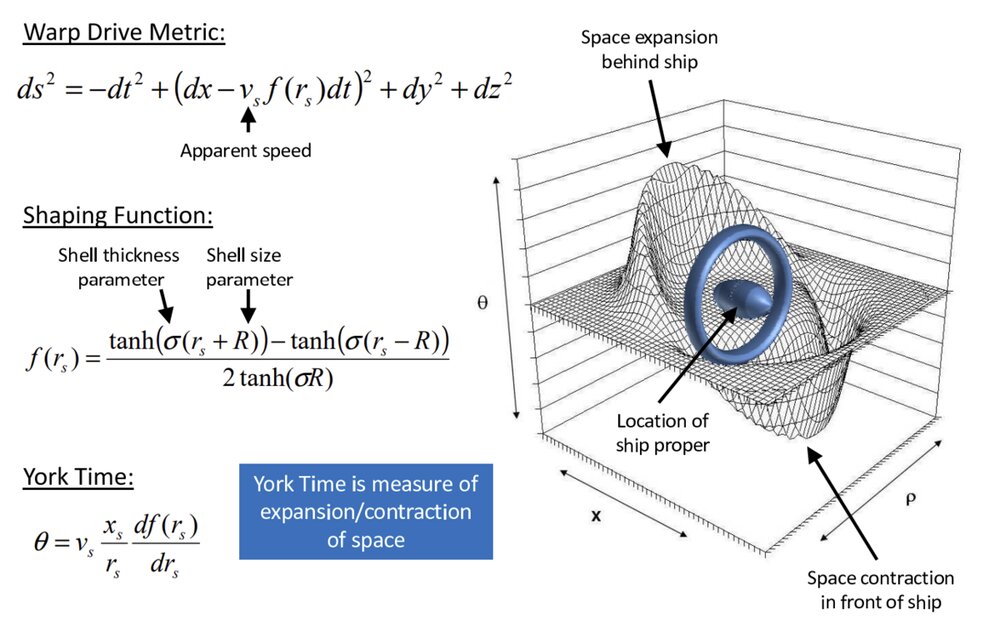
In 1994 Miguel Alcubierre described a bubble that squeezes space in front of a ship and stretches it behind, so the ship rides along like a surfer and never locally beats light. The math is legitimate. The catch is what it needs to exist: matter with negative energy, in a form nobody has ever observed and that breaks every rule physicists use for matter that can exist.
The estimates have fallen a long way. A 1997 calculation needed a negative mass ten orders of magnitude greater than the visible universe. Later work got it down to a few suns, then to about a Jupiter. Every one of those numbers is still negative, and shrinking a negative number doesn't change its sign.
You might have seen "positive energy warp drive" headlines in 2021 and 2024. I went and read the papers, and both describe drives slower than light. The one that claimed otherwise was taken apart in 2022. Even with the exotic matter in hand, you couldn't steer, because no signal can reach the front of your own bubble. And stopping would release a blast of radiation that wipes out whatever you were flying toward.
The twelfth problem: general AI
Look back over the list and most of the entries stall in the same place. Fusion needs a way to hold a plasma steady that no human could tune by hand. New superconductors, designed proteins, drug molecules and cancer vaccines are each a search for one right answer among billions of candidates. Different sciences, one kind of obstacle: too many possibilities, and people can only test them a few at a time.
That kind of search is what AI systems are good at, and a general intelligence would be good at all of it at once, reading every paper in every field and designing the next experiment. That's why it's the key to the rest. It also means the case has to rest on things that actually happened.
Plenty already has. The prediction half of problem five was cracked by AlphaFold, and that won a Nobel. Google's GenCast weather model beat Europe's best forecasting system on 97.2% of 1,320 targets, in about eight minutes of computing. In February 2024 a reinforcement learning controller kept a real fusion reactor out of an instability its standard controls couldn't avoid, which is problem seven getting help from problem twelve.
Plenty of claims also fell apart. DeepMind announced 2.2 million new crystals, and a review in Chemistry of Materials found "scant evidence" that any were new, credible and useful at once. An MIT paper saying AI helped scientists find 44% more materials was withdrawn in 2025 over the validity of its data. When OpenAI said a model had solved ten open Erdős math problems, the mathematician who keeps the list called it "a dramatic misrepresentation". The model had found answers that were already published.
Nobody agrees on when. Lab leaders talk about this decade, and a survey of 2,778 AI researchers put even odds on human-level machine intelligence by 2047.
Either way, the direction is clear. Weather forecasting and protein structure have jumped forward because of AI, and plasma control is starting to. Those are exactly the kind of problem the rest of this list is made of. Even the warp drive belongs here. If there's a loophole in physics, a mind that has read everything is the likeliest thing to find it, and if there isn't one, it'll be the thing that tells us for sure.
Quick answers
Has nuclear fusion produced more energy than it uses?
Not yet. The National Ignition Facility gets more energy out of its fuel pellet than its lasers deliver, but making that laser light takes around 300 megajoules from the grid, and the best shot returns about 3% of that.
Has CRISPR cured anyone?
It's treating people. Casgevy, approved in December 2023, is a one-time procedure for sickle cell disease that switches fetal hemoglobin back on and leaves the mutation in place. It's slow and costly to give, and 64 people received it in 2025.
Does a room-temperature superconductor exist?
No. LK-99 was a copper sulfide impurity and the Rochester claims were retracted. The best confirmed result works at about −23°C, and only under 1.7 million atmospheres of pressure.
Is a warp drive possible?
Not under any known physics. Every version needs negative energy in a form nobody has observed, and the 2021 and 2024 "positive energy" designs are both slower than light.