DeepSeek's V4.1 Flash edged past GPT-6 Astra on one independent test
It's 13 points behind Astra on the overall index, and DeepSeek has already backed off retiring V4 Pro in its favor.
DeepSeek released V4.1 Flash on September 10, 2026, and put the weights on Hugging Face under the MIT license, so anyone with the hardware can download and run it. The company calls it "the smallest model in our new architecture family". Smallest is relative: the announcement describes a 552B-parameter mixture of experts, and the model card says it handles contexts of up to one million tokens (a token is roughly three quarters of a word).
Five days on, it's first on one of Artificial Analysis's independent tests, a hair ahead of GPT-6 Astra. It's also the model DeepSeek said would replace its own flagship, V4 Pro, a plan the company dropped within three days.
Is it 552B, 748B or 763B?
All three numbers are real, and they count different things. Parameters are the size of the model, and DeepSeek's model card gives 552B "backbone parameters". Further down, the same card lists Engram conditional memory at another 196B parameters, "sparsely accessed via token-based lookup".

Add those two and you get 748B. I'd assumed the posts saying 748B were correcting a mistake in the first reports. They're counting the memory in.
Hugging Face's own counter goes higher again: its API adds up 763,205,315,794 parameters in the uploaded files. Latent Space's AINews newsletter went through the same files and put the gap down to 14.2B for the draft model DeepSeek uses in speculative decoding, plus 0.5B for the vision encoder.
Why it reads more cheaply than it writes
This is the design DeepSeek leads with. The model's 40 layers are split into a 20-layer encoder and a 20-layer decoder. While it reads your input, a stage the card calls prefill, it uses 8B active parameters per token. Writing the answer takes 16B.
Baseten, which serves the model through its own API, walked through the split in a post last updated September 11. Because the decoder's cache is built from the encoder's output, "prefill only needs to run the encoder, activating 8B parameters per token, while decode runs the full model at 16B." The older V4 Flash, it points out, used 13B for both, so the new model "trades a heavier decode (16B) for a much lighter prefill (8B)."
That trade suits one kind of user in particular. Baseten says it helps "coding agents, where agentic loops generate far more prefill tokens than decode tokens", and the card's own phrase is "input-heavy agentic workloads". An agent that rereads a long, growing context on every step spends most of its time reading.
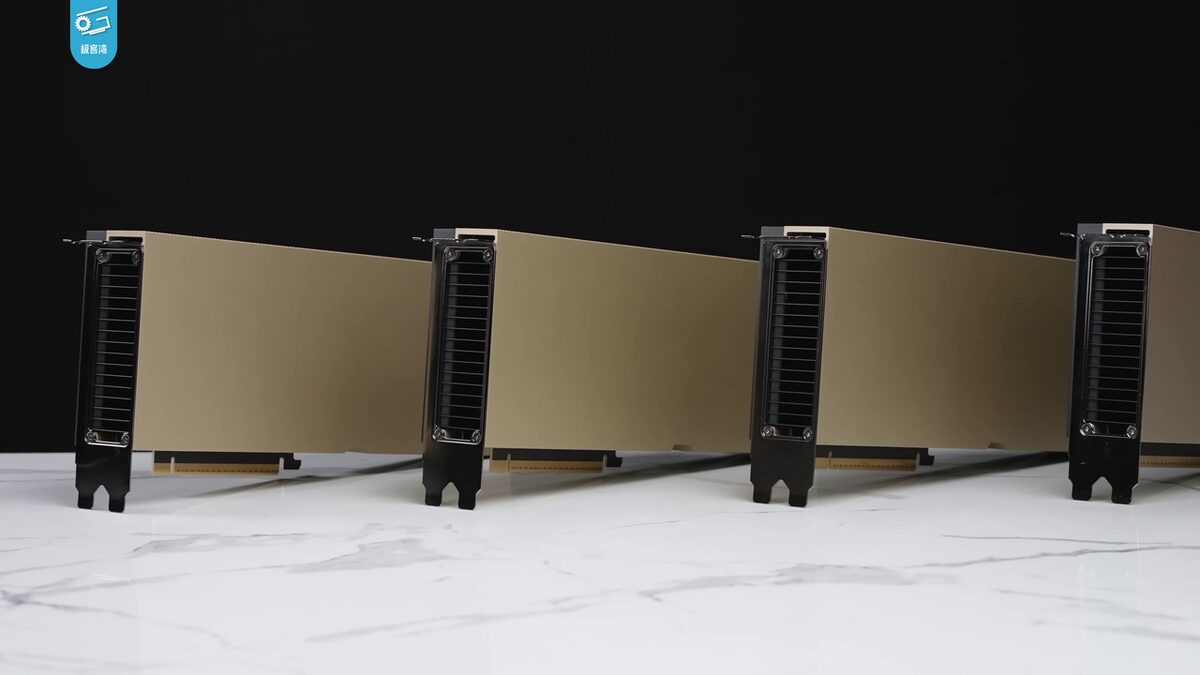
The KV cache shrank as well. It now takes 890 bytes per token, which DeepSeek puts at roughly a quarter of V4 Flash, and the announcement says the cache needs 1/4 the HBM and 1/8 the SSD storage of the previous generation.
Two smaller details surprised me more than the architecture did. Pictures aren't bolted on afterward: image and text embeddings go through the model together from the start of pre-training, across 45T tokens. And reasoning effort is now a dial from 1 to 100, where V4 Pro had named levels (every result in DeepSeek's new tables is at 100).
What DeepSeek compared it with
DeepSeek's launch table sets V4.1 Flash against Opus 5.0, GPT-5.6 Sol, K3, GLM-5.3 and its own V4 models. Neither GPT-6 Astra nor Claude Fable 5.1 is on it.
Against that field it wins a few and loses some by a lot. On DeepSWE v1.1, a software engineering test, it scores 74.2 to Opus 5.0's 74.0. On Terminal-Bench 4.0 it's 31.2 against 51.8, and on Humanity's Last Exam 36.8 against 56.3.
One table further down is easy to miss. The 74.2 comes from running the model inside a minimal agent harness called mini-SWE. Run the same test through Claude Code's harness and DeepSeek reports 69.8, below the 74.0 and 73.0 its main chart lists for Opus 5.0 and GPT-5.6 Sol.
What Artificial Analysis measured
Artificial Analysis runs every evaluation on its own. On September 7, 2026, it added AutomationBench-AA to its Intelligence Index. The test uses a private set of tasks in simulated business apps, among them Gmail, Google Sheets, Slack and Salesforce, and scores the share of each task's objectives a model completes without a guardrail violation.
AutomationBench-AA
Intelligence Index v4.3
V4.1 Flash, at max reasoning effort, is first on that leaderboard at 68.9%. GPT-6 Astra at max is second at 68.5%. I didn't expect a model named Flash to top anything Astra had been entered in. Still, 0.4 points is a margin I wouldn't build much on.
The overall index is where the gap shows. V4.1 Flash scores 40 there, while GPT-6 Astra (max) and Claude Fable 5.1 both score 53. It's quick, fourth of 113 comparable models at 209.8 output tokens a second, and Artificial Analysis also calls it "very verbose": it produced 250M tokens working through the index, where the median for its class is 140M.
One company had numbers out before DeepSeek did. OpenDesign, which runs a benchmark of design tasks, posted on September 9: "It reached 98% of GPT-6 Astra's score at 1.4% of the cost on everyday design tasks based on user requests." Hugging Face dates the model's repo to 02:17 UTC the next day.
DeepSeek changed its mind about V4 Pro
The September 10 announcement was blunt: "We're phasing out V4-Pro." From 04:00 UTC on September 14, every request for deepseek-v4-pro was going to be answered by V4.1 Flash, "until V4.1-Pro launches".
That didn't happen. DeepSeek's changelog now reads: "In response to user demand, we have decided to continue providing API services for DeepSeek V4 Pro after September 14, 2026, with the billing method remaining unchanged."
The Internet Archive's copies of the changelog narrow down when that changed. The capture from September 11 still says DeepSeek plans to retire V4 Pro, and the one from September 13 has the reversal. The announcement page hadn't caught up when I read it on September 15, so DeepSeek's own docs said both things at once.
The two older Flash models got no such reprieve. The changelog says V4 Flash and V4 Flash Vision Exp have been retired, and requests that still use their names go to V4.1 Flash.
DeepSeek didn't give a date for V4.1 Pro.