Anthropic says Claude designed 17 proteins that bind scorpion toxins in lab tests
None of the 17 has been tested against real venom yet, and Anthropic says it hasn't made an antivenom.
On October 20, 2026, Anthropic posted a study in which an internal Claude research model designed small proteins meant to latch onto scorpion neurotoxins. Two contract labs tested 211 of the designs. Seventeen bound their target tightly enough to meet Anthropic's bar for a binder.
Claude ran most of the campaign itself, over 64 hours, from one prompt and four follow-ups. Anthropic wrote the prompts with Citrini Research, a financial research firm that had asked whether motivated nonexperts could take on a real health problem with AI. Anthropic is releasing all 211 designs and their lab data.
- Designs generated
- 318,484
- Tested in the lab
- 211 (180 picked by Claude, 31 added by the team)
- Met the binder criteria
- 17
- Compute
- on the order of 10,000 GPU hours
- Antivenom
- not tested for neutralization in cells or mice
What Claude did on its own
The target came out of a brainstorm with Claude itself. Scorpion stings are a neglected problem. Anthropic's post puts them at 1.2 million or more a year, with more than 3,250 deaths, mostly among children in places where medical care is hard to reach.
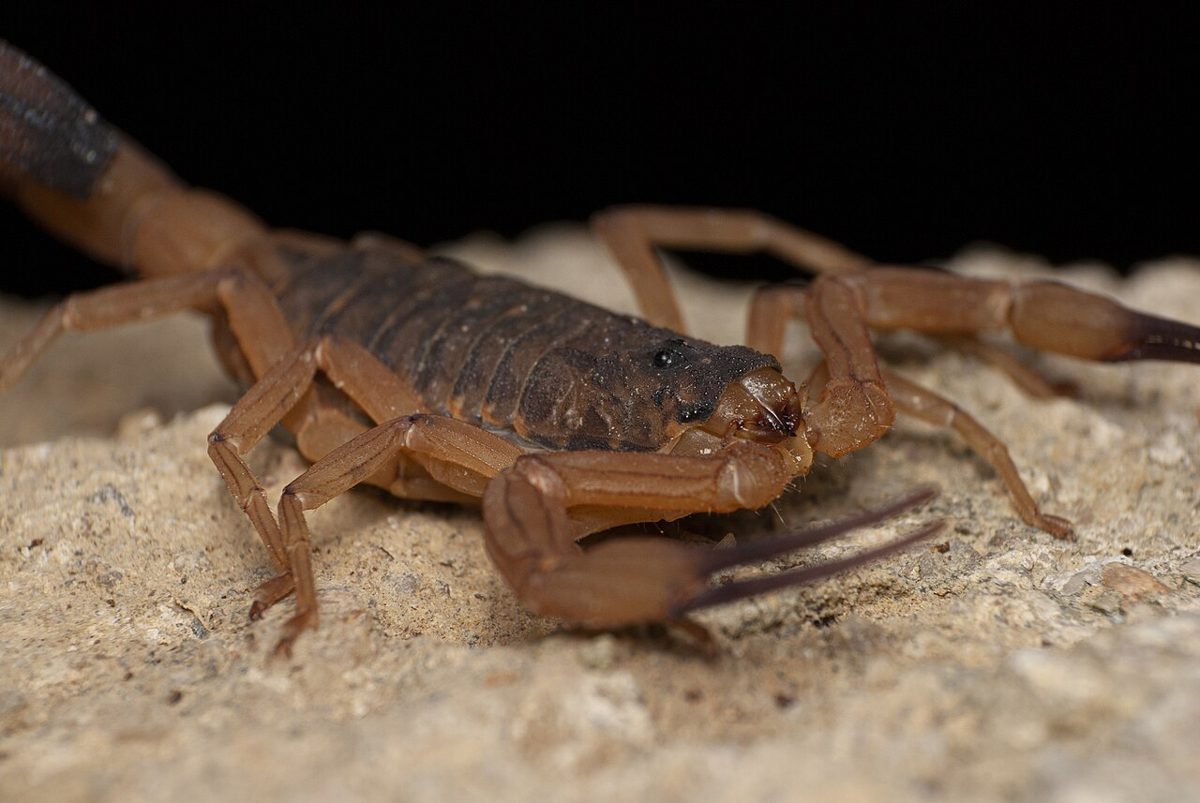
The prompt named five toxins from four regions. Cn2 is from Mexico and Ts1 from Brazil, AaH I and AaH II are North African, and LqhIII comes from the Middle East. From there Claude did a lot of the deciding. It searched public structure databases for the toxin shapes, picked five spots on each toxin for its designs to grab, set the quality thresholds, and chose how hard to lean on each of its 12 design tools.
It produced 318,484 designs, threw out anything resembling a toxin or a known protein, and predicted how 553,052 design-toxin pairs would fit together. After 64 hours it handed over 180. At Anthropic's request, it also emailed the protein sequences to Twist Bioscience itself, in messages saying Claude wrote them.
So was it autonomous? Mostly, I think.Claude picked most of the final 180, the strongest binder among them, only after the team's third follow-up, and those follow-ups mainly pushed it toward binders that could catch several toxins at once.
What the labs found
Adaptyv Bio and Twist Bioscience made the proteins in different ways and measured binding with the same method. A design counted only if it bound in every replicate at both labs (LqhIII was tested at Adaptyv alone) at 1 µM or tighter. It also had to leave an unrelated human protein alone.
Seventeen passed. Seven were against Cn2, four each against AaH I and AaH II, and two against LqhIII, and every one of them bound a single toxin. The 151 designs aimed at two, three or all five toxins (91 of them went for all five) didn't hit more than one, which was the part the follow-ups had pushed hardest on.
The two best, Cn2-B1 and Cn2-B2, bound Cn2 with single-digit nanomolar affinity at both labs. In competition tests they seemed to grab the same spot as LR, an antibody reported to neutralize Cn2 in mice. Anthropic reads that as a sign they'd likely neutralize the toxin too, but it hasn't tested that.
This is exploratory work, and we’re not claiming to have produced an antivenom—for that, we’d have to test the binders within living cells, then in mice, among many other steps. But it’s an example of how Claude can concretely assist research in protein design.
Anthropic sent the work to two outside researchers. Timothy P. Jenkins of the Technical University of Denmark called envenomings a field "largely starved of innovation due to low commercial incentives." Susana Vázquez Torres of Spain's National Cancer Research Centre said binding is no longer the main bottleneck.
The challenge is to use these extraordinary tools to develop molecules that can become real drugs, ones that are safe, affordable, and widely accessible.
Who gets stung, and who could use this
A 2025 review of scorpion stings in Frontiers in Public Health puts the global toll at more than 3,000 deaths a year and names Mexico, Brazil, Iran, Algeria and Morocco as high-incidence countries. It says children carry a disproportionately high burden, and that late access to antivenom is a major barrier in poor areas. The review also notes that Centruroides scorpions, the genus behind Cn2, live in Mexico, Central America and the southwestern United States.
Most of today's antivenoms still come from horses. Venom milked from thousands of scorpions is used to immunize them, and the antibodies are purified from their blood, which can take months. Anthropic says these usually cover only a few neurotoxins and are costly or scarce in many regions. Designed binders could, in principle, be tuned for stability and made more easily where stings happen. Anthropic hasn't shown that yet, and says so.
Then there's the cost of finding them. The campaign used on the order of 10,000 GPU hours, and Anthropic says itself that's much more than most researchers have. It adds that a simplified single-agent setup on one GPU over 24 hours reached comparable scores in simulation, though it didn't report lab results for that version. Granted, this is a first study. I'd still want those before reading this as something a small lab in Morelos or Minas Gerais could run.
Anthropic's next steps for Cn2-B1, if it went further, would be a test against toxin purified from real venom, then patch-clamp recordings on sodium channels, then mice. The post doesn't say whether Anthropic or anyone else will do them.
More on Anthropic
- Anthropic says Claude found 493 attack-surface issues in 25 open-source projects, including OpenSSHOctober 21, 2026
- Anthropic opens Claude Duet, an agent that messages you first and asks before it paysOctober 21, 2026
- Anthropic says it will revise the preemption language in its draft federal AI bill after backlashOctober 20, 2026
- OpenCode says a distillation attack exposed the AI provider keys of 1.4% of its Console usersOctober 19, 2026