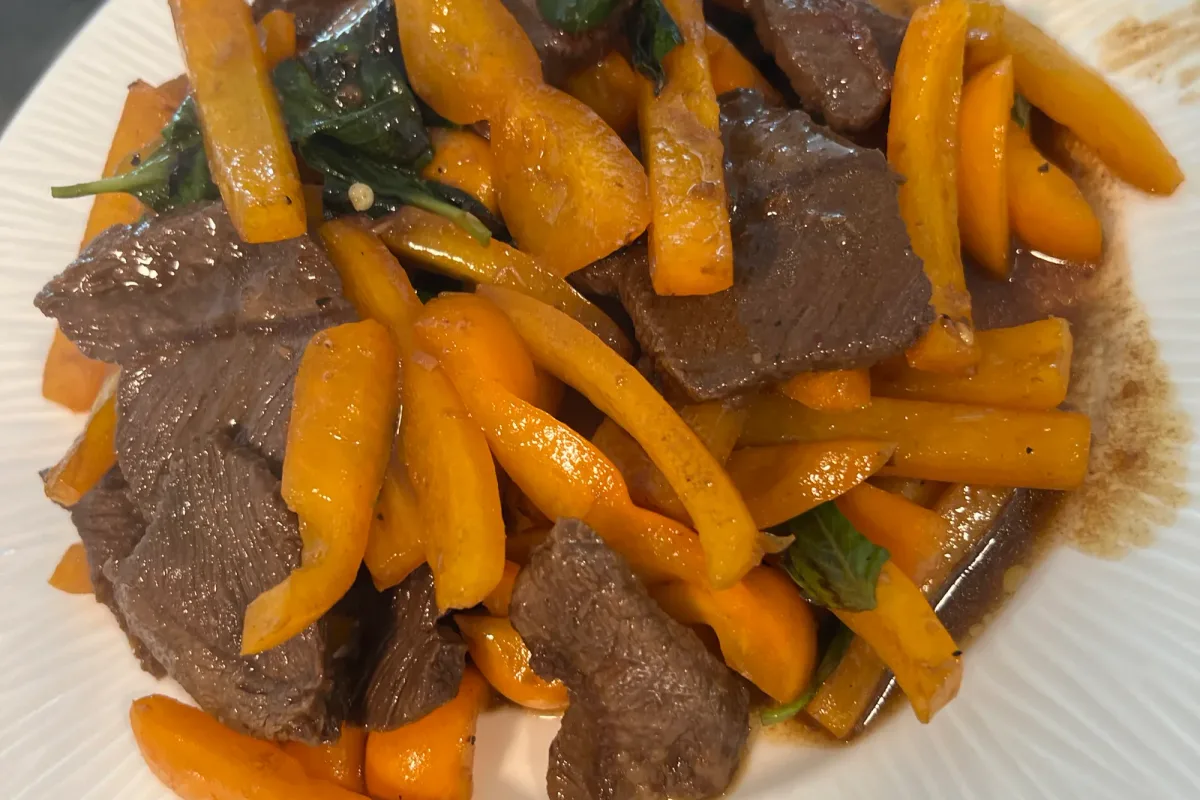
There's a version of this dish that's just beef and peppers, and it's fine. It's dinner. But there was a jar of sha cha sitting in the fridge door (Bull Head brand, the one with the cartoon cow on it), and once you notice a jar of sha cha, it's hard to go back to plain soy sauce alone out of habit.
Magical Sha Cha Sauce
Sha cha translates literally to "sand tea," which tells you nothing useful about what it actually is: a savory, faintly sweet, slightly funky paste built on dried shrimp, garlic, and shallots, more at home on a Taiwanese hot pot table than in a home stir-fry. A couple of tablespoons of it, backed up by soy sauce for salt and Shaoxing wine for backbone, turns a plain beef-and-pepper stir-fry into something with actual depth. It's the kind of ingredient that makes you wonder what else it's been quietly good at the whole time you weren't using it.
An Uncommon Cut of Steak
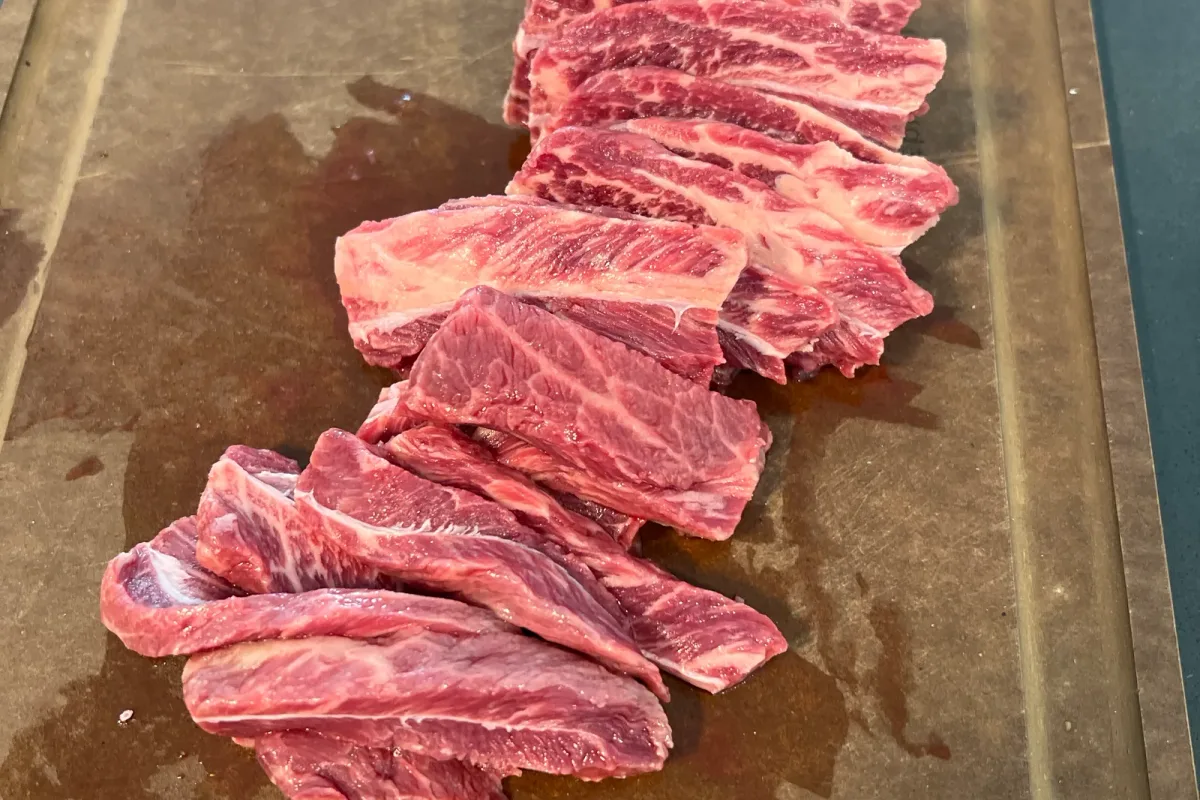
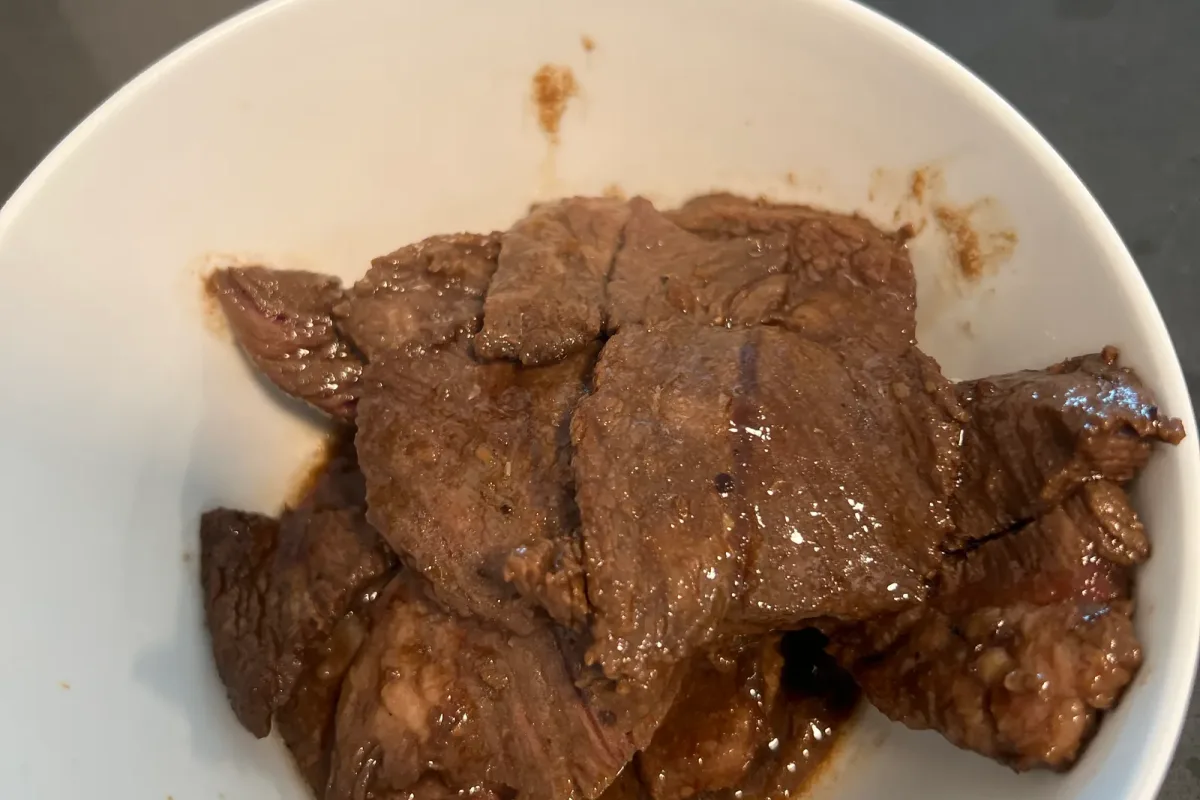
The steak was labeled flat iron on the package, though the more honest name is top blade: same cut, same lean marbling running through it in tight seams. Sliced thin against the grain, it barely needs the marinade to go tender; the marinade's really there for flavor. If your grocery store doesn't carry flat iron or top blade, flank steak, skirt steak, or even sirloin tip all slice up and cook the same way here: thin strips against the grain, seared hot and fast.
Peppers
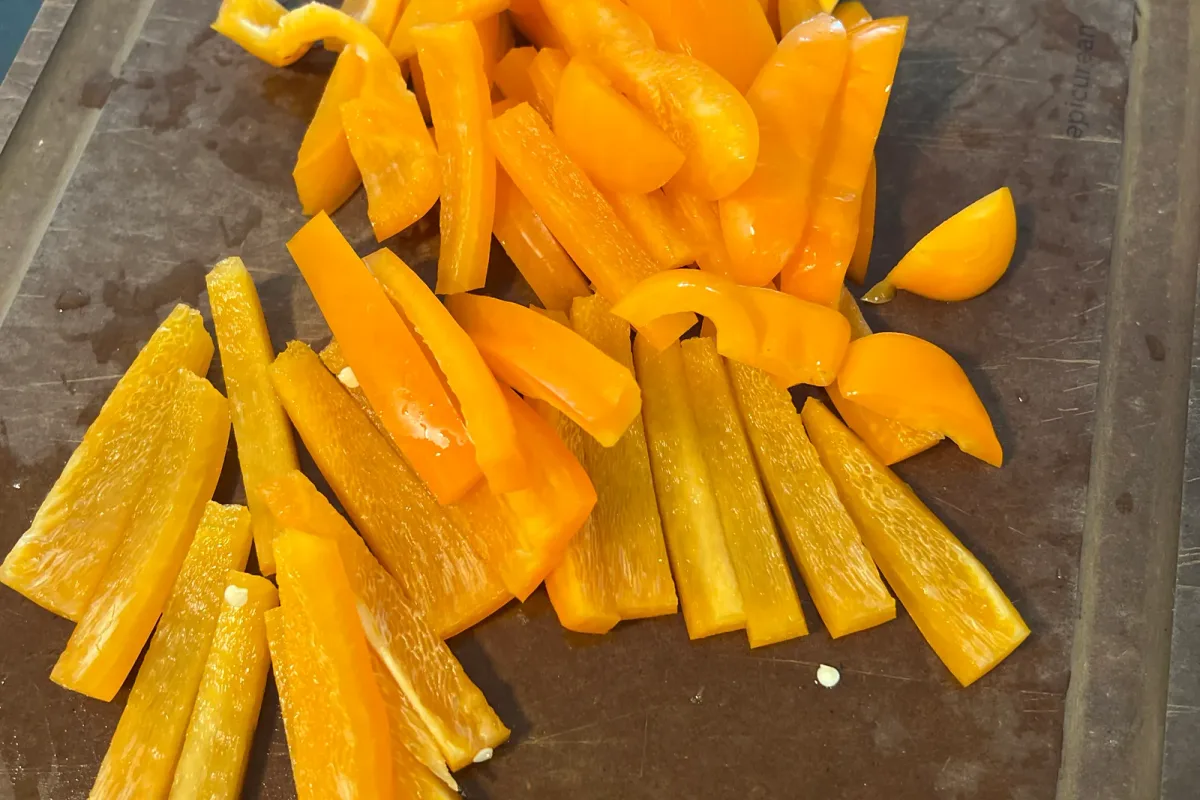
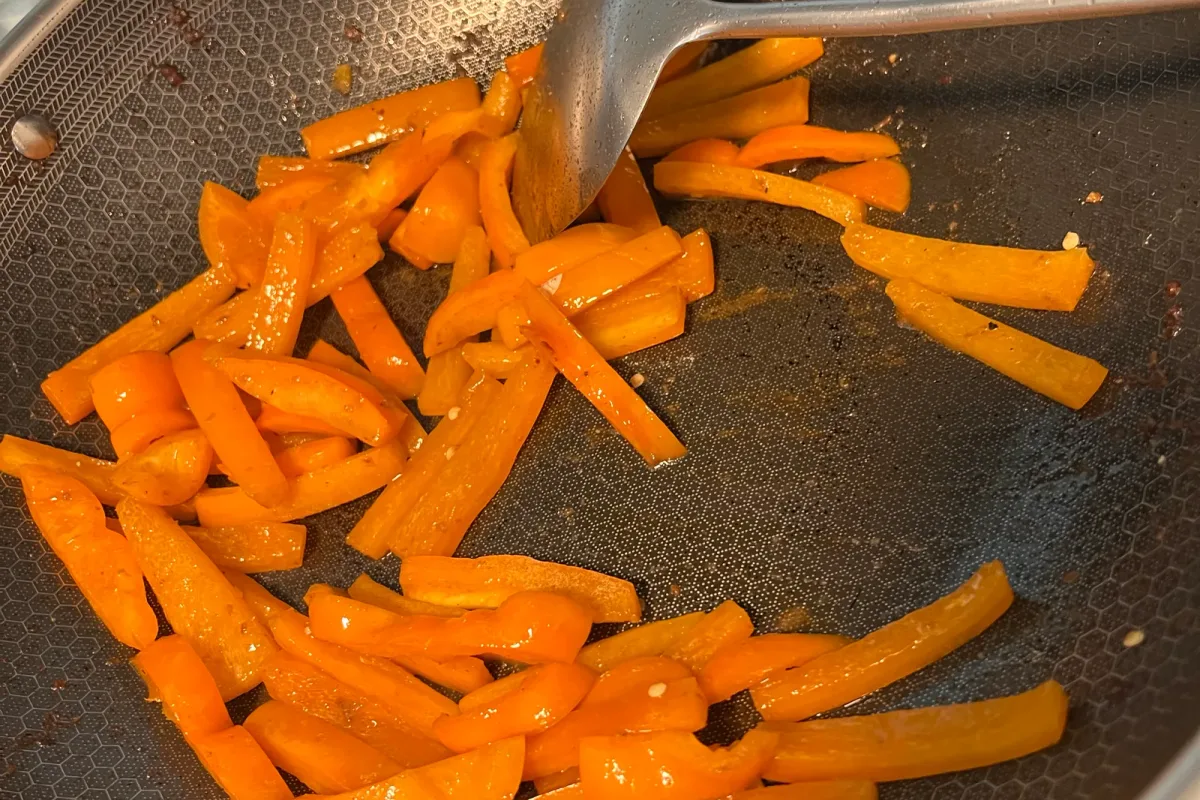
Two whole orange bell peppers, cored and cut into strips wide enough to still have some bite after they hit the wok. They go in hot and fast, just until the edges start to blister and go a little translucent. Nobody wants a steamed pepper pretending to be a stir-fried one.
Basil
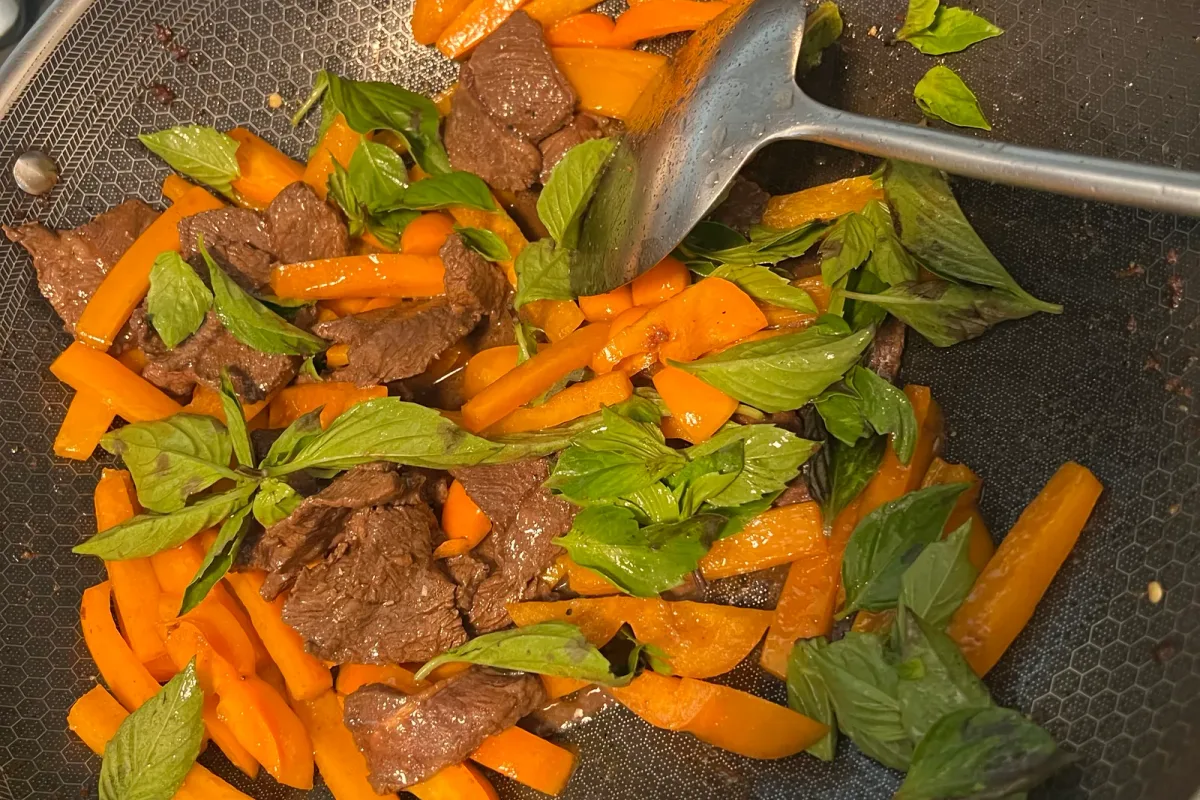
Thai basil is the herb doing the real work here: sturdier and more anise-forward than the Italian kind, tossed in at the very end, stems and all, so the leaves wilt instead of cook. It holds its own against a sauce this assertive instead of disappearing into it, and the anise note plays deliberately well against the umami hit of the sha cha. If Thai basil isn't in reach, regular Italian basil is a fine substitute; it's milder and sweeter, so it reads a little softer against the sauce, but added the same way, at the very end, it still brings the herbal lift the dish needs.
How to Make It
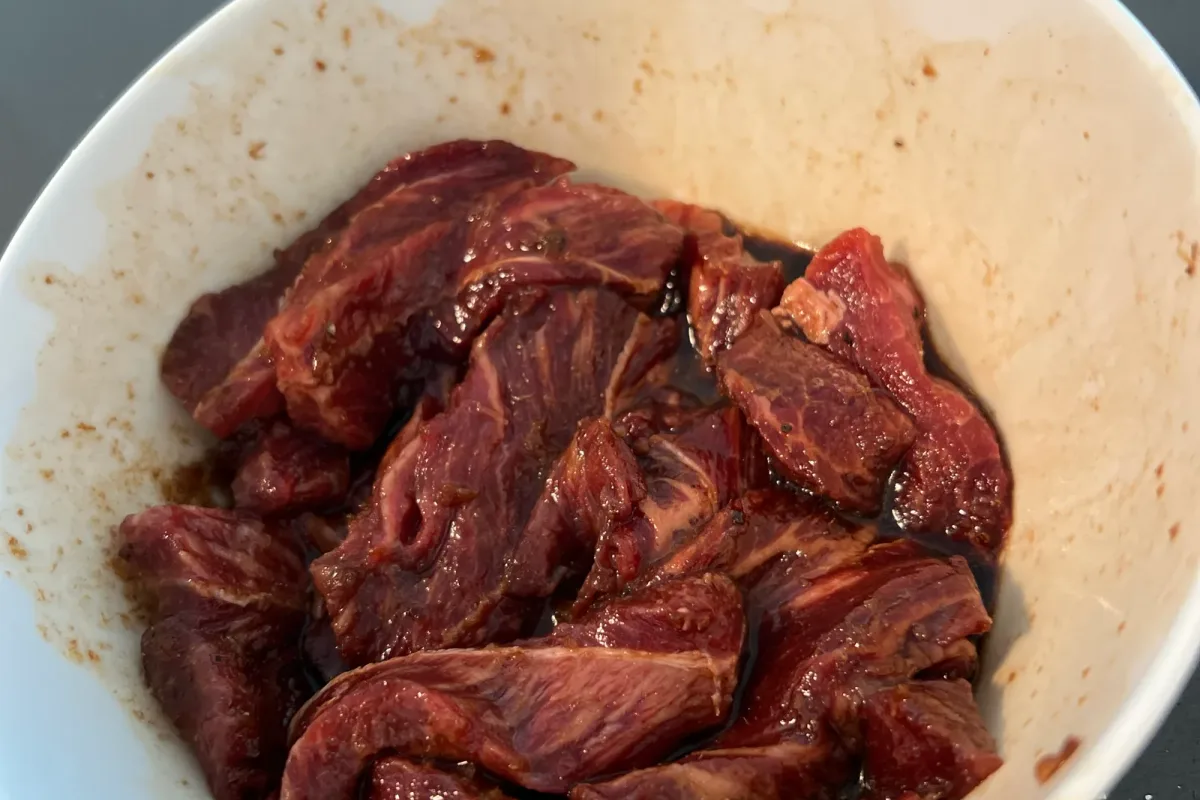
Season the sliced beef with salt and pepper, then whisk it together with the soy sauce, Shaoxing wine, sha cha sauce, minced garlic (or garlic powder if that's what's on hand), and a splash of sesame oil. Fifteen minutes of marinating is enough; this isn't a cut that needs to sit overnight to forgive anything. Sear the beef in a hot, lightly oiled wok until browned, then set it aside and stir-fry the peppers in the same wok until they blister. Return the beef to the wok with the peppers, add the basil, and toss just until the leaves wilt. Taste, adjust the salt and pepper, and serve immediately over rice, sauce pooling at the edge of the plate the way it always does when there's more of it than the beef knows what to do with.
The full ingredient list and step-by-step breakdown are in the recipe card above, for anyone who wants to skip straight to cooking it.
What do you think? Interested in trying this or have ways to improve the recipe? Comment below!
Comment testing